Can a Regular Drill Bit Go Through Metal? You might wonder about this when starting a project involving metalwork.
While a regular drill bit can penetrate softer metals like aluminum or thin steel, its effectiveness diminishes significantly with harder or thicker metals.
Using an inappropriate bit can lead to wear, breakage, and unsatisfactory results. It’s crucial to recognize the limitations of standard drill bits.
Knowing when to switch to specialized bits ensures better precision and durability in your work.
Always assess the material and bit type before drilling to achieve the best outcome.
Can a Regular Drill Bit Cut Metal?
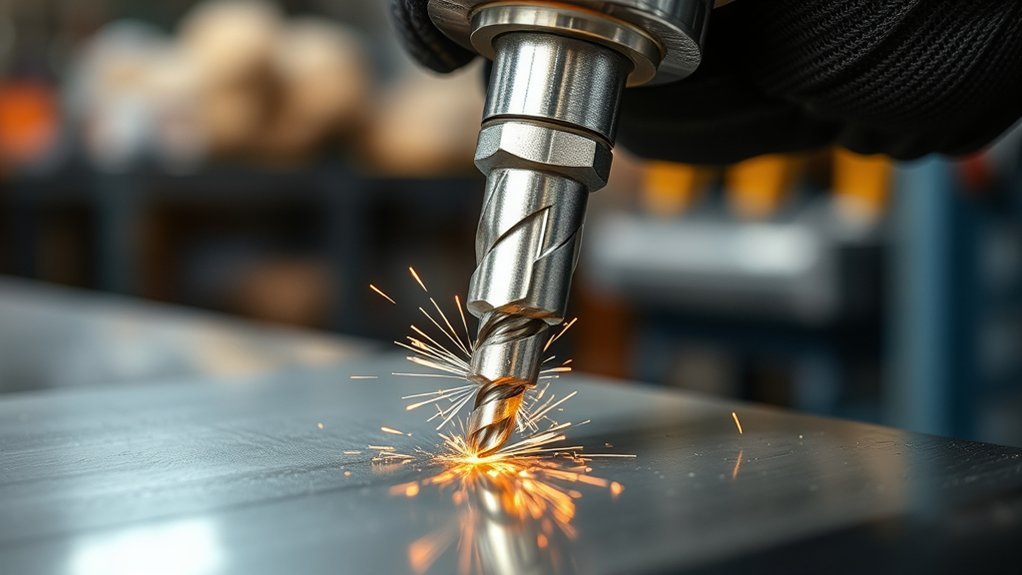
How effective is a regular drill bit when it comes to cutting metal? A regular drill, typically designed for wood or plastic, struggles with metal applications due to its material composition and tip geometry.
These drill bits lack the hardness and heat resistance required for penetrating metal surfaces efficiently. When you use a regular drill bit on metal, it generates excessive friction and heat, leading to rapid dulling or breakage.
Regular drill bits lack the hardness and heat resistance needed for effective metal drilling, causing quick wear or breakage.
For light-duty tasks on thin, soft metals, a regular drill may suffice temporarily, but precision and longevity suffer. In industrial or frequent metal drilling, specialized bits crafted from high-speed steel or cobalt alloys outperform regular drills by maintaining sharpness and cutting efficiency, ensuring cleaner holes and extended tool life.
Hence, while possible, relying on a regular drill bit for metal isn’t ideal.
What Types of Metal Can a Regular Drill Bit Handle?
Which metals can you effectively drill with a regular drill bit? Typically, regular drill bits handle softer metals or thin sections without losing integrity. You can rely on them for:
- Aluminum alloys, especially softer grades and thin plates, where the bit can maintain sharpness and control heat buildup.
- Copper sheets, due to copper’s softness and malleability, regular bits cut through efficiently without excessive wear.
- Thin mild steel, though tougher than aluminum or copper, thin mild steel can sometimes be drilled if you control speed and pressure carefully.
Avoid using regular bits on hardened or thick metals, as these increase heat and wear, leading to bit damage or poor results. Understanding metal hardness and thickness is essential to selecting the right drill bit for clean, precise holes.
How to Identify Drill Bits Meant for Metal
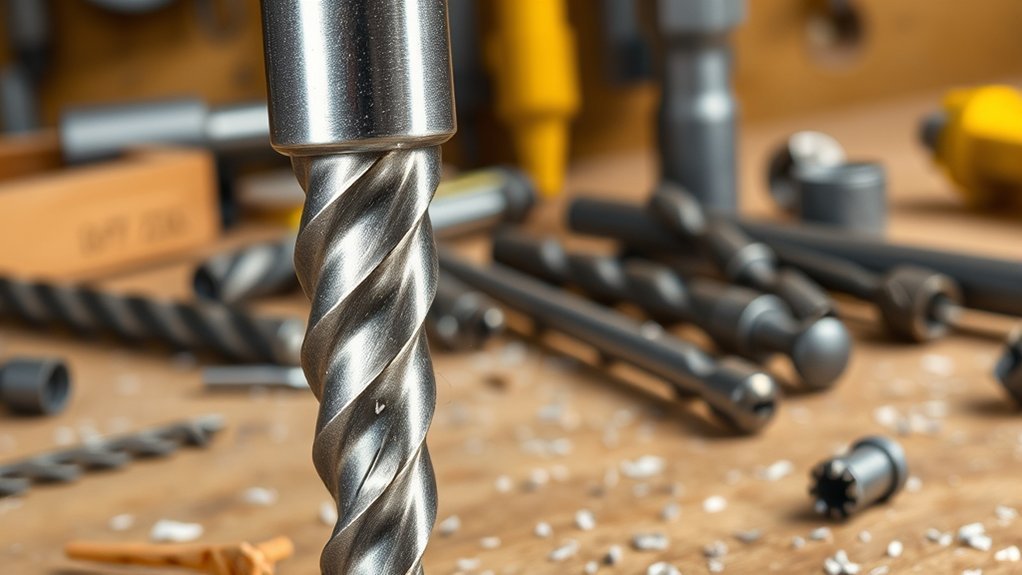
You can identify drill bits meant for metal by examining their material composition and tip design. Bits made from high-speed steel or cobalt alloys resist heat and maintain sharpness during metal drilling.
Additionally, look for a split point or angled tip, which reduces walking and improves precision on metal surfaces.
Drill Bit Material Types
Although various drill bit materials exist, identifying those designed specifically for metal requires understanding their composition and properties. You’ll want to focus on material hardness, heat resistance, and durability. These are key factors influenced by drill bit coatings and drill bit grades. Here’s how you can differentiate:
- High-Speed Steel (HSS): Standard for metal drilling; offers good heat resistance but wears faster without coatings.
- Cobalt Alloys: Contain 5-8% cobalt, enhancing heat tolerance and hardness; excellent for stainless steel and tough metals.
- Carbide-Tipped: Extremely hard and wear-resistant; best for prolonged metal drilling but brittle and costlier.
Tip Design Differences
Three key tip design features help you quickly identify drill bits meant for metal: point angle, cutting lip geometry, and chisel edge thickness. Metal drill bits typically have a sharper point angle (around 118° to 135°) optimized for harder materials.
The cutting lips are ground to precise geometries to efficiently remove metal shavings while minimizing heat buildup. The chisel edge is thinner to reduce thrust force and improve penetration.
| Feature | Metal Drill Bit Characteristic |
|---|---|
| Point Angle | 118° to 135° |
| Cutting Lips | Precisely ground, sharp |
| Chisel Edge Thickness | Thin for reduced thrust |
| Tip Shapes | Split-point or parabolic |
| Cutting Angles | Optimized for hard metal cutting |
Why Regular Drill Bits Struggle With Hard Metals
Several factors cause regular drill bits to underperform when working with hard metals. Primarily, the mismatch between drill bit materials and metal hardness limits effectiveness. Standard bits often use softer materials that dull quickly on tough metals.
Additionally, their geometry isn’t optimized for high stress. You’ll find three main reasons for this struggle:
- Material Composition: Regular bits typically have lower hardness and wear resistance, causing rapid degradation.
- Heat Resistance: Hard metals generate more heat, which standard bits can’t dissipate efficiently, leading to premature failure.
- Cutting Edge Design: Standard bits lack the precise tip angles needed to penetrate dense metal structures effectively.
Understanding these constraints helps you select the right tools that match the hardness of the metal you’re working with, ensuring better performance and longevity.
How Drill Speed and Pressure Affect Drilling Metal
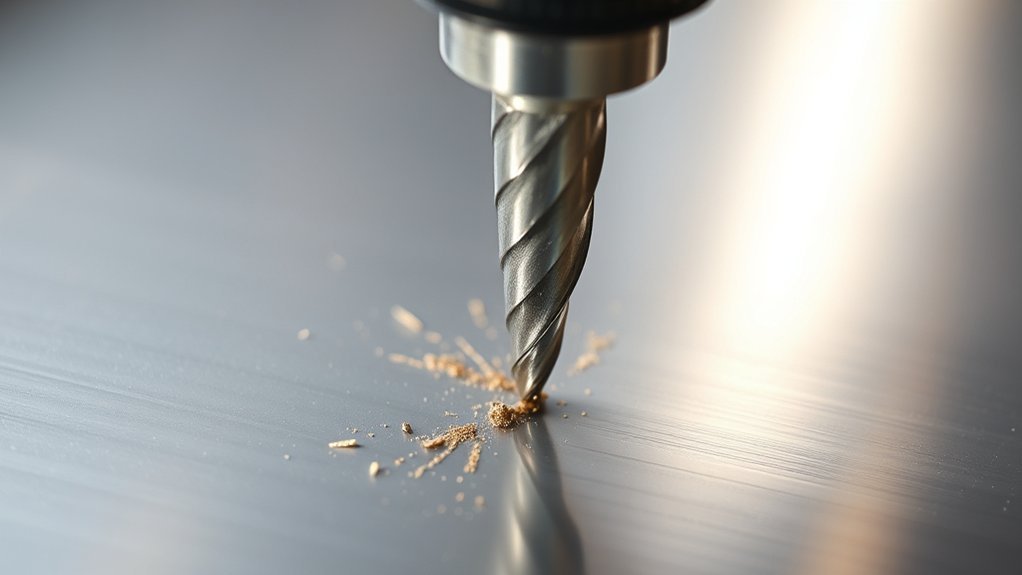
When you adjust drill speed and pressure properly, you greatly improve the efficiency and quality of metal drilling. Ideal drilling techniques require balancing rotational speed with applied pressure to prevent bit overheating and material deformation.
Too high a speed generates excessive heat, softening the metal and dulling the bit quickly. Conversely, too low speed prolongs drilling time and increases wear.
Pressure management is equally vital; excessive force can cause bit breakage or wandering, while insufficient pressure leads to inefficient cutting and bit slipping.
Tips for Drilling Metal Safely With a Regular Drill Bit
You need to select the correct drill bit material and size to match the metal type and thickness. Always clamp the workpiece securely to prevent movement during drilling, ensuring accuracy and safety.
Applying cutting fluid reduces heat buildup and prolongs bit life, improving the overall drilling process.
Proper Drill Bit Selection
Choosing the right drill bit is essential for drilling metal safely and efficiently with a regular drill. You need to take into account drill bit materials and drill bit coatings to optimize performance and durability.
High-speed steel (HSS) bits are common for metal due to their heat resistance. Cobalt alloys offer superior strength for harder metals. Additionally, coatings like titanium nitride reduce friction and extend bit life.
To select the proper drill bit:
- Match the bit material to the metal’s hardness to prevent premature wear.
- Use coated bits for smoother cuts and less heat buildup.
- Choose the correct bit geometry. 135° split-point bits reduce walking and improve penetration.
Adhering to these criteria guarantees safe, precise, and effective metal drilling with your regular drill.
Secure Metal Workpiece
Proper drill bit selection improves cutting efficiency, but securing the metal workpiece firmly is equally important to maintain accuracy and safety during drilling. You must prioritize workpiece stability to prevent movement that could cause drill bit wandering or injury.
Employ reliable clamping techniques, such as C-clamps or a bench vise, to immobilize the metal securely on your work surface. Position clamps to avoid obstructing the drill path and guarantee an even grip to distribute pressure uniformly.
Avoid relying on hand-holding, as this compromises control and increases risk. Confirm the workpiece is flat and stable before starting to drill, as any shifting can degrade hole precision and damage both bit and material.
Use Cutting Fluid
Although drill bit quality and workpiece stability are essential, applying cutting fluid considerably reduces friction and heat buildup when drilling metal. You’ll notice cutting fluid benefits by extending drill bit life and improving hole quality through effective lubrication.
To maximize these benefits, follow these steps:
- Apply a steady stream or drop of cutting fluid directly to the drill bit’s cutting edge before and during drilling.
- Reapply cutting fluid periodically for prolonged drilling to maintain lubrication and cooling.
- Use appropriate cutting fluids designed for metal drilling, such as mineral oil or specialized synthetic fluids, for ideal heat dissipation and chip removal.
Common Mistakes to Avoid When Drilling Metal With Regular Bits
When drilling metal with regular bits, you’ll often encounter issues that stem from common mistakes such as applying excessive pressure or neglecting to use lubrication. These errors can cause overheating, bit dulling, and poor hole quality.
Proper drilling techniques require steady, moderate pressure to prevent bit damage and guarantee efficient cutting. Additionally, neglecting bit maintenance, like failing to sharpen or clean the bit, reduces cutting performance and increases the risk of metal deformation.
Avoiding rapid feed rates and maintaining an appropriate speed tailored to the metal type also play vital roles. Ignoring these factors compromises both tool longevity and workpiece integrity.
When to Switch From Regular Bits to Metal-Specific Drill Bits
How do you determine the right moment to switch from regular drill bits to metal-specific ones? Understanding when to switch is essential for efficiency and durability. Regular vs metal bits differ mainly in material composition and cutting design, affecting performance on metals.
Consider these three indicators for when to switch:
- Material hardness: If the metal exceeds mild steel hardness, regular bits dull quickly.
- Drilling frequency: Frequent metal drilling demands metal-specific bits to maintain precision.
- Heat generation: Excessive heat during drilling signals inadequate bit composition.
Best Alternatives to Regular Drill Bits for Tough Metals
Identifying the right moment to switch from regular drill bits sets the stage for selecting ideal alternatives designed specifically for tough metals. When you encounter hardened steel or stainless alloys, cobalt drill bits offer superior durability due to their high heat resistance and hardness.
These bits maintain sharpness longer under intense conditions, making them best for prolonged drilling tasks. Alternatively, titanium drill bits provide a lightweight yet robust option coated with titanium nitride, reducing friction and enhancing lifespan.
While not as hard as cobalt, titanium bits excel in moderate metal applications and resist corrosion effectively. Choosing between cobalt and titanium drill bits depends on metal hardness, drilling frequency, and budget constraints.
Conclusion
You can use a regular drill bit on softer metals like aluminum or thin steel, but be aware it wears out quickly on harder materials. Notably, drill bits specifically designed for metal last up to five times longer than regular bits when used correctly.
To avoid damaging your tools and workpiece, adjust speed and pressure carefully, and know when to switch to metal-specific bits. Doing so improves efficiency, precision, and overall safety in your drilling tasks.
In conclusion, while a regular drill bit can go through metal, using bits designed for metal is essential for better performance and durability.