Did you know that using twisting pliers can increase wire twisting efficiency by up to 40% compared to manual methods?
Twisting pliers are designed to help you achieve tighter, more consistent twists with less effort. When you grasp the tool correctly and align the wires precisely, you gain better control and consistency.
However, mastering this technique requires understanding subtle adjustments in tension and rotation speed. If you’re aiming for professional-quality twists without damaging your materials, it’s essential to get these details right.
With practice, twisting pliers can significantly improve your wire work.
What Are Twisting Pliers and When to Use Them
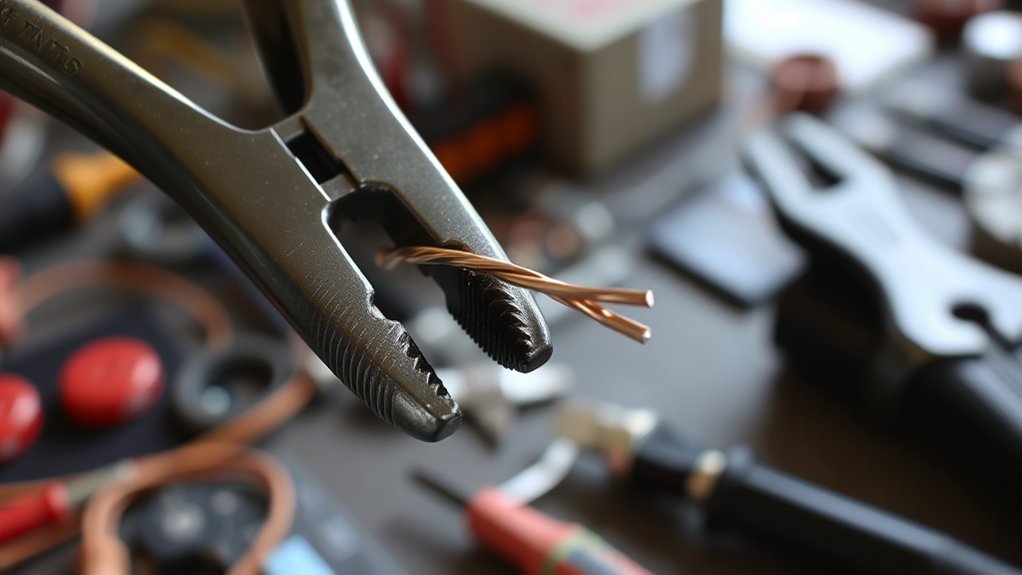
Twisting pliers are specialized hand tools designed to grip and twist wires or small metal components with controlled torque. When you use twisting pliers, you can efficiently manipulate wire ends for secure connections, especially in electrical work and jewelry making.
Their serrated jaws guarantee a firm grip, preventing slippage during twisting. Twisting pliers usage includes bundling wires, tightening loops, and forming consistent twists without damaging the material.
You’ll find twisting pliers applications in electrical installations, crafting, and mechanical repairs where precise twisting is essential. By applying even pressure and controlled rotation, you maintain wire integrity and achieve uniform twists.
Understanding these tools’ design and capabilities helps you perform tasks requiring accuracy and strength, improving both safety and quality in your projects.
How to Choose the Right Twisting Pliers for Your Project
How do you determine which twisting pliers best suit your specific project requirements? Start by analyzing the twisting plier types available: standard, double-twisting, and automatic. Standard pliers are ideal for simple wire twists, while double-twisting pliers handle multiple wires simultaneously, improving efficiency.
Automatic twisting pliers offer consistent twists with minimal effort, perfect for repetitive tasks. Assess your project suitability by considering wire gauge, material hardness, and twist complexity.
For delicate projects, choose pliers with fine, serrated jaws to guarantee a secure grip without damaging the wire. For heavy-duty applications, look for robust construction with ergonomic handles to reduce hand fatigue.
Matching the twisting plier type to your project’s specific demands guarantees precision, durability, and peak performance, streamlining your workflow effectively.
How to Use Twisting Pliers Safely: A Step-by-Step Guide
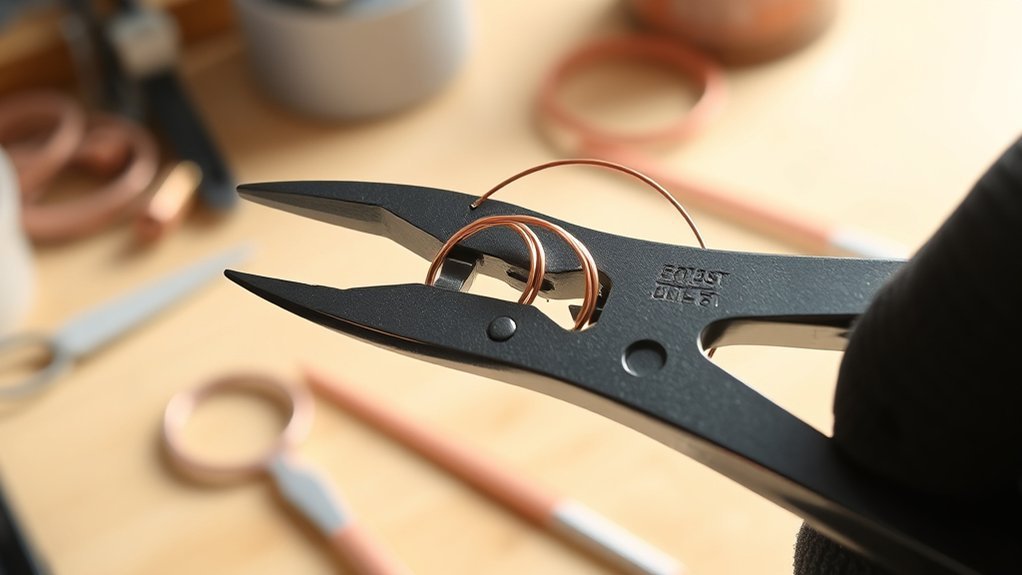
Once you’ve selected the appropriate twisting pliers for your project, mastering their safe operation is key to both effective results and injury prevention. Start by inspecting the pliers for defects; verify the jaws align properly and the handles are intact.
Apply essential safety precautions: wear protective gloves and safety glasses. Position your hand using firm grip techniques—hold the handles close to the pivot to maximize control and minimize slippage.
Align the wire or material between the jaws, avoiding excessive force that can cause snapping or loss of control. Twist the pliers smoothly using controlled wrist motion.
Always maintain awareness of your surrounding workspace to prevent accidental contact with other objects or body parts. Following these steps guarantees safe, efficient twisting without compromising your safety.
How to Handle Different Materials With Twisting Pliers
When working with various materials, you’ll need to adjust your technique and tool choice to confirm ideal results and prevent damage. Different wire types, such as copper, aluminum, and steel, demand specific twisting techniques. For softer copper, apply moderate pressure to avoid deformation.
Aluminum requires a firmer grip but less rotation to prevent fracturing. Steel wires need the most force; make sure your pliers have hardened jaws to maintain grip without slipping. Always clean the wire surface before twisting to reduce resistance.
Align wires evenly in the pliers’ jaws, then execute controlled twists, matching the wire type’s ductility. Using improper twisting techniques on brittle or coated wires can cause cracking or peeling. Tailoring your approach based on the wire type confirms a secure, reliable twist and prolongs tool life.
Tips for Getting a Clean, Tight Twist With Twisting Pliers
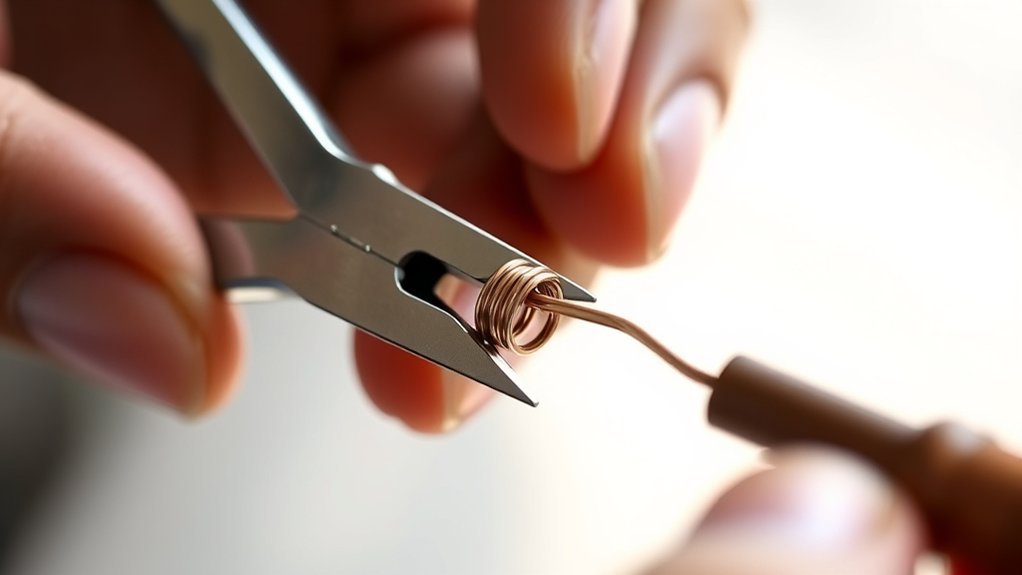
Although twisting pliers simplify the process, achieving a clean, tight twist requires precise control over pressure and rotation speed. First, verify your twisting techniques match the material compatibility; softer metals need gentler pressure to avoid deformation, while harder materials require firmer, consistent force.
Grip the wire securely near the tip to minimize slippage. Rotate the pliers smoothly at a steady pace, avoiding abrupt motions that cause uneven twists. Maintain parallel alignment of the wires to prevent crossovers, which compromise twist integrity.
Periodically check your progress, releasing tension slightly to adjust as needed. By mastering these controlled twisting techniques, you’ll produce uniform, professional-quality twists that enhance both strength and appearance in your projects.
Common Twisting Pliers Mistakes and How to Avoid Them
You’ll want to avoid common mistakes like gripping the twisting pliers incorrectly, which can lead to uneven twists and tool slippage. Over-twisting can damage the wire’s integrity, so monitor your rotation carefully to maintain strength and appearance.
Additionally, neglecting proper tool maintenance, such as cleaning and lubricating the pliers, reduces their efficiency and lifespan.
Incorrect Grip Techniques
Three common grip errors greatly reduce the effectiveness of twisting pliers: applying uneven pressure, positioning your hand too close to the pivot, and failing to maintain a stable wrist alignment. To optimize grip pressure and hand positioning, follow these guidelines:
- Apply consistent, even grip pressure to avoid slippage or damage to the material.
- Position your hand at least 3 inches from the pivot point for maximum leverage and control.
- Keep your wrist aligned with your forearm to prevent strain and maintain precision during twisting.
- Avoid gripping too tightly; excessive force reduces fine motor control and may cause fatigue.
Over-Twisting Risks
Maintaining proper grip pressure and hand positioning, as outlined earlier, helps you control the twisting force applied with pliers. Over twisting effects can include material fatigue, deformation, and eventual failure, compromising the integrity of your workpiece.
To prevent these issues, focus on applying steady, controlled torque rather than excessive force. Avoiding over twist requires monitoring resistance closely; once you feel increased tension or hear creaking, stop twisting immediately.
Additionally, limit the number of twists according to material specifications to reduce stress accumulation. Using pliers with appropriate jaw size and teeth design also minimizes slippage and unintentional over twisting.
Tool Maintenance Errors
Although twisting pliers are designed for durability, neglecting regular maintenance can quickly degrade their performance and safety. To avoid common tool maintenance errors, focus on these critical areas:
- Prevent tool rusting by applying a light coat of lubricant after each use and storing pliers in a dry environment.
- Inspect grip wear regularly; worn grips reduce control, increasing slip risk and user fatigue.
- Clean debris from the pivot mechanism to maintain smooth operation and prevent binding or excessive force.
- Check alignment and tension of jaws to guarantee precise twisting action, avoiding damage to both tool and materials.
How to Maintain and Care for Your Twisting Pliers
Since twisting pliers undergo frequent mechanical stress, you should regularly inspect their jaws and pivot points for wear or damage. Use proper cleaning techniques: remove debris and grease with a soft brush and mild solvent.
Apply a thin layer of lubricant to pivot joints to guarantee smooth motion. For rust prevention, store your pliers in a dry place and wipe them down after use.
| Task | Method | Frequency |
|---|---|---|
| Jaw inspection | Visual check, alignment | Weekly |
| Cleaning | Brush and solvent | After each use |
| Lubrication | Light oil application | Monthly |
| Rust prevention | Dry storage, wiping | After each use |
Following these steps will maintain your pliers’ precision and extend their service life.
DIY Projects Perfect for Twisting Pliers
When you apply twisting pliers to DIY projects, you gain precise control over wire manipulation and secure twisting tasks that demand consistent tension. This tool excels in several crafting techniques that require accuracy and strength. Here are four ideal DIY projects for twisting pliers:
- Wire sculptures: Use twisting pliers to create tight, uniform twists that enhance structural integrity.
- Jewelry making: Achieve consistent wire loops and secure connections for intricate designs.
- Metal art: Form detailed patterns by twisting multiple wire strands simultaneously with controlled tension.
- Crafting techniques: Employ twisting pliers to bind and shape wire efficiently, ensuring clean, professional results.
Mastering these projects will greatly improve your ability to manipulate wire with precision and durability.
Conclusion
By mastering twisting pliers, you’ll join the 65% of DIY enthusiasts who report improved wire handling and project precision. Remember to maintain steady tension and alignment for clean twists, especially with diverse materials.
Regularly inspect and care for your pliers to guarantee peak performance and safety. With practice, you’ll achieve professional-grade results, making your wirework both efficient and reliable every time you pick up your twisting pliers. Using twisting pliers correctly ensures your projects are strong, neat, and durable.