Yes, linseed oil does go bad, especially when exposed to air, heat, or light, which speeds up oxidation and chemical changes.
Raw linseed oil typically lasts 6 to 12 months, while boiled linseed oil can remain usable up to two years if stored properly.
Signs of spoilage include a rancid smell, cloudiness, or thickening.
Using expired oil may compromise your project’s finish quality and safety.
To understand how to spot spoilage and maximize shelf life, keep exploring these key factors.
Linseed Oil Shelf Life: How Long Does It Last?
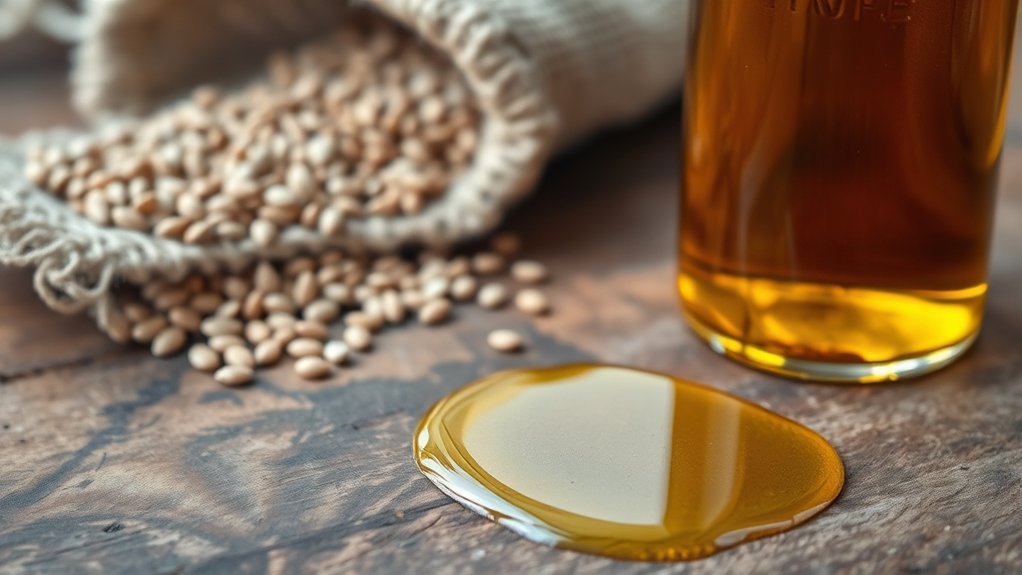
How long linseed oil lasts depends largely on its storage conditions and whether it’s raw or boiled. During linseed oil production, the oil’s exposure to oxygen accelerates oxidation, reducing shelf life.
Raw linseed oil typically lasts about 6 to 12 months when stored in a cool, dark place, whereas boiled linseed oil, containing drying agents, can last up to two years under ideal conditions.
The linseed oil benefits, such as its ability to polymerize and protect wood, diminish as the oil oxidizes and becomes rancid. To maximize shelf life, you should store linseed oil in airtight containers away from heat and light, slowing degradation.
Understanding these factors helps you preserve the oil’s functional properties for woodworking or other applications effectively.
How to Tell if Linseed Oil Has Gone Bad?
When can you be confident that linseed oil has spoiled? You need to rely on a combination of smell test and visual inspection to make an accurate judgment. Linseed oil undergoes oxidation, which alters its chemical composition, leading to spoilage.
Confidently identify spoiled linseed oil through smell and visual cues indicating chemical changes from oxidation.
Here’s what to look for:
- Smell test: A rancid or sour odor indicates the oil has degraded.
- Visual inspection: Cloudiness, darkening, or sediment suggests chemical changes.
- Texture change: Thickening or gel-like consistency points to polymerization, a sign of spoilage.
Using these evidence-based criteria helps you determine if linseed oil is no longer suitable for use. Regularly checking these factors guarantees you avoid using compromised oil in your projects or applications.
Is It Safe to Use Expired Linseed Oil?

Is it wise to use linseed oil past its prime? When considering expired oil safety, you need to evaluate the oil’s current state through a thorough oil quality assessment.
Linseed oil undergoes oxidation over time, which can degrade its drying properties and produce rancid odors. Using expired linseed oil may compromise the finish’s durability and appearance, especially in fine woodworking or art applications.
From a safety perspective, it’s generally non-toxic, but degraded oil can harbor microbial growth or become sticky, affecting workability. As a result, before use, inspect the oil for changes in color, smell, and consistency.
If these indicators suggest significant degradation, it’s best to avoid using it to guarantee ideal results and safety. Proper oil quality assessment is essential for making an informed decision.
How to Store Linseed Oil to Keep It Fresh
To maintain linseed oil’s effectiveness and extend its shelf life, you should store it under specific conditions that minimize exposure to factors accelerating oxidation. Proper storing techniques focus on reducing contact with air, light, and heat, all of which degrade the oil.
Store linseed oil away from air, light, and heat to preserve its effectiveness and prolong shelf life.
Choose oil containers that are airtight and made of non-reactive materials, such as dark glass or metal, to limit light penetration and oxygen exposure. Store the containers in a cool, dark place to further inhibit oxidative processes.
Key storing techniques include:
- Using tightly sealed, opaque or tinted oil containers to block light and air.
- Keeping the oil in a temperature-controlled environment, ideally below 20°C (68°F).
- Avoiding frequent opening of the container to minimize oxygen exposure.
These evidence-based steps will help keep your linseed oil fresh and effective longer.
Choosing Linseed Oil: Raw vs. Boiled for Your Project
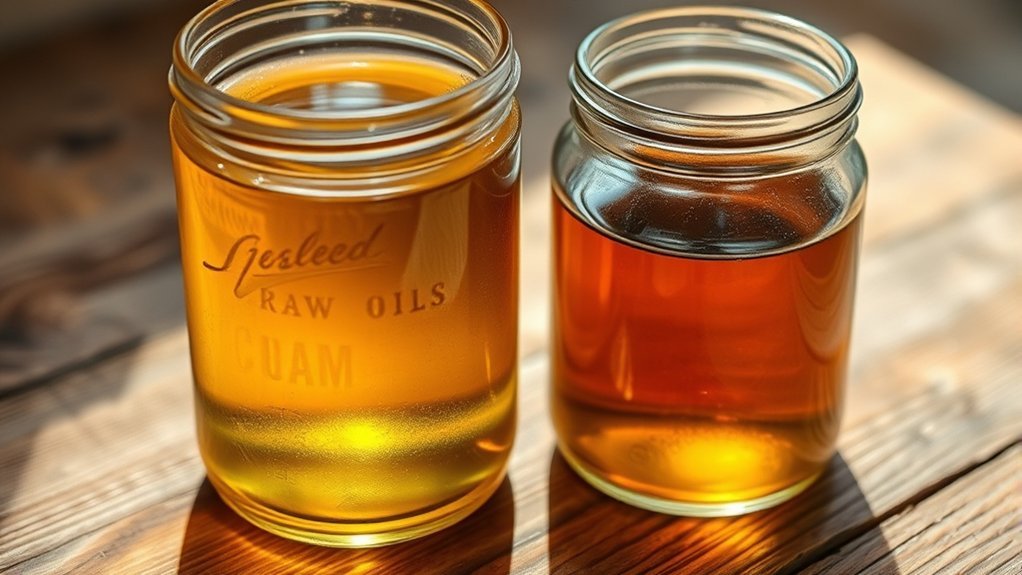
Although both raw and boiled linseed oil originate from the same source, their chemical compositions and drying times differ considerably, affecting suitability for various projects. You’ll find that raw linseed oil offers benefits such as a non-toxic, natural finish and slower drying, which allows deeper penetration into wood fibers. This is ideal for fine woodworking or preservation. However, the extended drying time can be impractical for projects needing quick handling.
On the other hand, boiled linseed oil contains chemical additives that accelerate curing, offering boiled advantages like faster drying and a more durable surface film. This makes it preferable for exterior applications or furniture requiring quicker recoat times. Understanding these distinctions helps you choose the right linseed oil variant, balancing raw benefits against boiled advantages to suit your project’s timeline and durability needs.
Frequently Asked Questions
Can Linseed Oil Be Used for Cooking or Consumption?
You shouldn’t use linseed oil for cooking or consumption due to potential toxins and low cooking safety. Instead, opt for food-grade flaxseed oil, which offers nutritional benefits safely when properly processed and stored.
What Are the Environmental Impacts of Disposing Linseed Oil?
If you improperly pour linseed oil down drains, it can create environmental hazards by contaminating waterways. Using proper disposal methods, like hazardous waste collection, minimizes pollution and protects ecosystems.
This is shown by reduced local water contamination in careful disposal studies.
How Does Linseed Oil Compare to Other Drying Oils?
You’ll find linseed oil dries faster than many drying oils due to its high polyunsaturated oil composition. This accelerates polymerization, making it ideal when quicker drying times are needed compared to tung or walnut oils.
Can Linseed Oil Be Mixed With Other Oils or Solvents?
Picture a painter’s palette; you can mix linseed oil with other drying oils for enhanced drying times, but solvent compatibility varies. Turpentine blends well, while some solvents may hinder polymerization, so test mixtures carefully.
What Are Common Uses of Linseed Oil Beyond Woodworking?
You’ll find linseed oil used in painting techniques as a drying agent and binder. Additionally, it offers health benefits, like omega-3 fatty acids, supporting heart health and inflammation reduction, making it valuable beyond woodworking applications.
Conclusion
Think of linseed oil like a candle’s flame—bright and effective when fresh, but flickering and weak as time passes. If you spot changes in smell, texture, or color, it’s a clear sign the oil’s energy is fading. Using expired oil risks compromising your project’s integrity.
To keep that flame steady, store linseed oil in a cool, dark place, choosing the right type for your needs. Precision in care guarantees lasting performance and quality. Always remember, linseed oil can go bad, so proper storage and timely use are essential to maintain its effectiveness.