When you pick up vise grip pliers, you’re choosing a tool designed for more than just gripping.
Vise grip pliers are equipped with a locking mechanism that allows you to hold objects firmly without constant pressure. This feature makes them indispensable for tasks where precision and stability matter.
Whether you’re working on stubborn bolts, delicate metalwork, or irregular shapes, knowing how to leverage their unique features can greatly improve your efficiency.
But what specific applications make them so versatile?
What Are Vise Grip Pliers and How Do They Work?
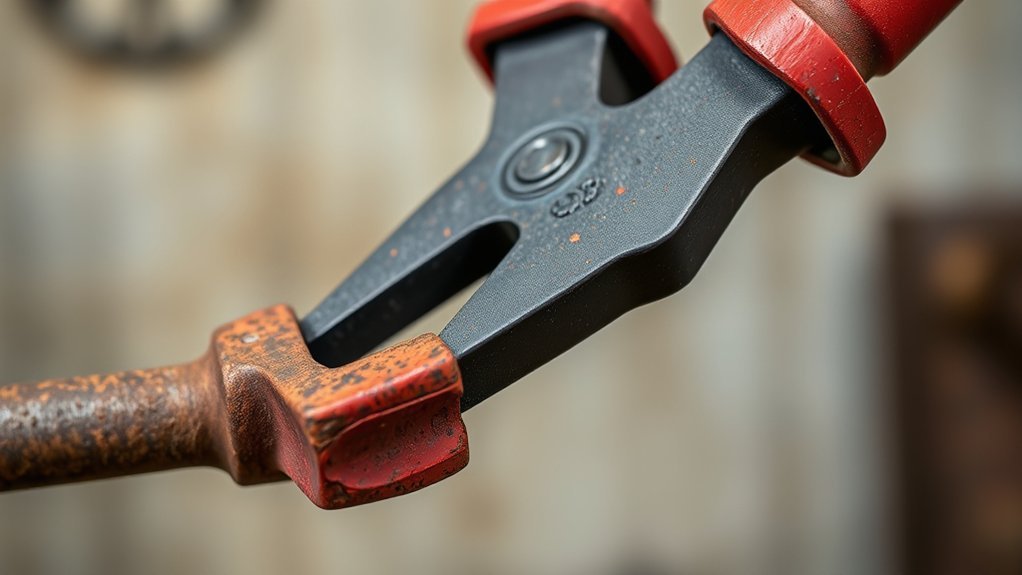
Vise grip pliers are locking tools designed to clamp firmly onto objects, allowing you to hold, twist, or turn them with controlled force. Understanding the types of vise grips is essential: standard locking pliers, needle-nose, and welding clamps each serve distinct functions based on jaw design and locking mechanisms.
The effectiveness of these tools depends heavily on vise grip materials; high-carbon steel and alloy steel are common, providing durability, strength, and resistance to wear. The locking mechanism uses an adjustable screw to set jaw tension, ensuring secure grip on varied shapes and sizes.
When you engage the lever, the tool locks in place, maintaining consistent pressure without continuous hand force, enhancing precision and safety in mechanical and assembly tasks.
Top Uses for Vise Grip Pliers: An Overview
You’ll find the locking mechanism on vise grip pliers provides consistent, hands-free clamping pressure, which enhances control during tasks. These pliers excel in common repair applications like loosening stuck bolts, securing materials for welding, and gripping irregular shapes.
Understanding these core benefits helps you apply the tool effectively across various mechanical and construction scenarios.
Locking Mechanism Benefits
Although many pliers offer gripping capabilities, the locking mechanism in these tools provides a significant advantage by maintaining a secure hold without continuous hand pressure. This feature enhances locking strength and contributes to the tool versatility that makes vise grip pliers indispensable.
Here’s why the locking mechanism benefits you:
- Consistent Pressure: It applies uniform clamping force, reducing slippage and improving task accuracy.
- Hands-Free Operation: Once locked, you can release your grip, allowing multitasking or repositioning.
- Enhanced Stability: It enables sustained force on irregular or stubborn objects without fatigue.
Common Repair Applications
The locking mechanism’s ability to maintain consistent pressure and stability makes these pliers highly effective for various repair tasks. When you utilize vise grip pliers, their tool versatility comes into play across multiple repair techniques, such as gripping rounded objects, clamping materials for welding, or loosening stubborn bolts.
You can rely on them to replace or supplement traditional wrenches, especially in tight spaces where conventional tools fail. Their firm lock guarantees hands-free operation, allowing you to precisely apply torque or hold components steady during assembly or disassembly.
Whether working on automotive repairs, plumbing fixtures, or metal fabrication, these pliers provide reliable grip and control. Understanding their common applications helps you optimize repair efficiency and select the correct tool for specific mechanical challenges.
Using Vise Grip Pliers to Remove Stripped or Rounded Screws
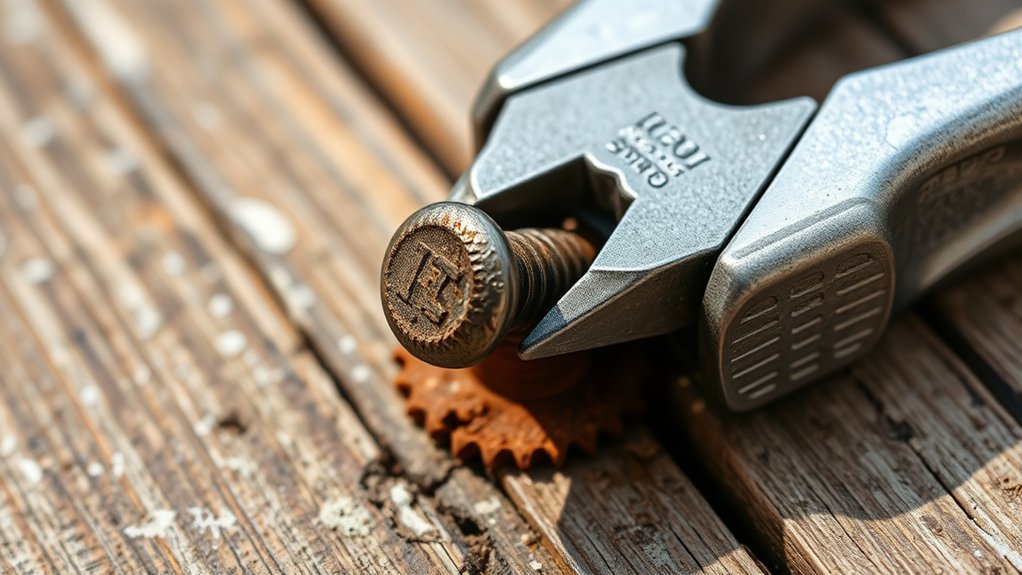
When screws become stripped or rounded, traditional screwdrivers often fail to provide sufficient grip for removal. Vise grip pliers excel in stripped screw removal and rounded screw extraction by clamping firmly onto the damaged screw head.
To use them effectively:
- Adjust the locking mechanism to open jaws wide enough to encompass the screw head.
- Squeeze the handles to lock the jaws tightly around the screw, ensuring minimal slippage.
- Turn the pliers counterclockwise to back the screw out steadily.
This method applies controlled torque, compensating for the lack of grip in damaged screws. By locking onto the irregular surfaces, vise grip pliers deliver reliable leverage and precision, making them indispensable for extracting screws that conventional tools cannot handle.
Vise Grip Pliers for Holding Metal Parts During Welding and Soldering
When you use vise grip pliers during welding or soldering, their secure clamping guarantees metal parts stay perfectly aligned without shifting. You’ll also benefit from their heat-resistant materials, which maintain grip strength even at elevated temperatures.
This combination enhances both safety and precision in your metalwork.
Secure Clamping Benefits
Although welding and soldering require steady hands, you’ll achieve better results by using Vise Grip pliers to hold metal parts securely. These tools excel in secure clamping techniques, providing consistent pressure that stabilizes components during heat application.
You’ll benefit from their versatile gripping applications, adapting to various shapes and thicknesses for precision work. Consider these advantages:
- Enhanced control prevents movement, ensuring accurate alignment and stronger joints.
- Consistent clamping pressure reduces the risk of warping or misalignment as metals expand.
- Quick-release mechanisms allow efficient repositioning without sacrificing grip reliability.
Heat Resistance Advantages
The secure clamping provided by Vise Grip pliers not only stabilizes metal parts but also offers significant heat resistance benefits during welding and soldering. You rely on these tools because they’re constructed with heat resistance materials that maintain integrity under high temperature exposure.
This temperature tolerance prevents deformation or loss of grip when holding metals exposed to intense heat. By using Vise Grip pliers, you guarantee consistent positioning without risk of slippage caused by thermal expansion or softening.
Their robust heat-resistant coatings and alloys extend the tool’s lifespan and enhance safety by minimizing heat transfer to your hands. In technical applications, this precise thermal endurance makes Vise Grip pliers indispensable for controlled metalwork, allowing you to focus on weld quality without tool failure concerns.
How to Clamp Irregular or Slippery Objects With Vise Grip Pliers
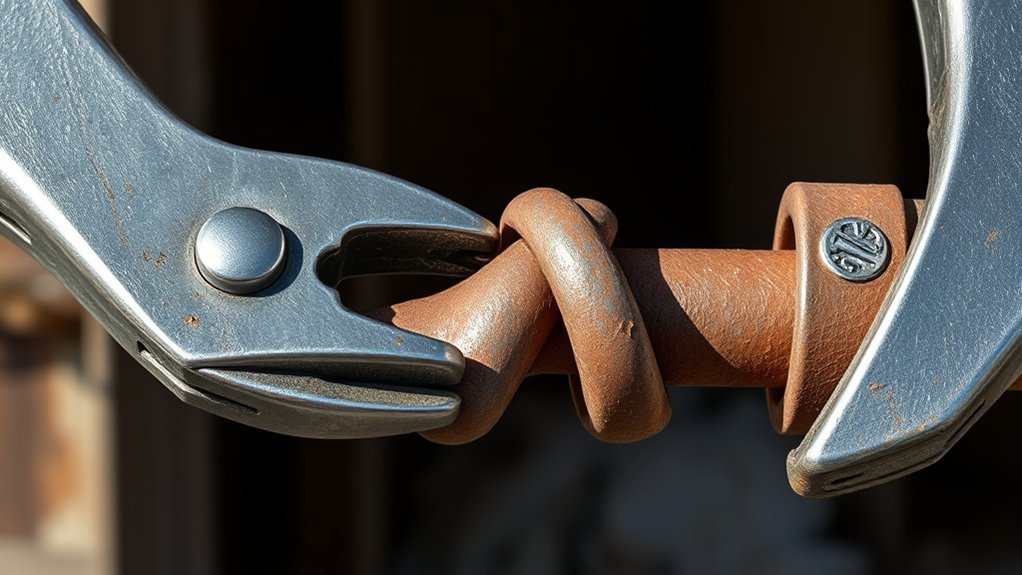
Clamping irregular or slippery objects with vise grip pliers requires adjusting the tool’s locking mechanism to guarantee a secure hold without damaging the workpiece. You’ll want to apply specific clamping techniques to enhance object stabilization effectively. Follow these steps:
- Adjust the screw at the handle’s end to set the jaw width slightly smaller than the object’s widest point.
- Position the jaws to maximize contact area, focusing on flat or textured surfaces to prevent slipping.
- Squeeze the handles firmly until the locking mechanism engages, ensuring pressure is evenly distributed to avoid deforming delicate materials.
Tightening and Loosening Nuts and Bolts Using Vise Grip Pliers
When you need to tighten or loosen nuts and bolts, vise grip pliers provide a reliable grip that prevents slippage and rounding. Their locking mechanism clamps firmly onto fasteners, allowing you to apply controlled torque without risk of damage.
For tightening bolts, adjust the pliers’ jaw size to fit snugly around the bolt head, then leverage the handle to increase torque precisely. When loosening nuts, the same grip and leverage reduce the effort needed, especially on corroded or stubborn fasteners.
The vise grip’s ability to maintain constant pressure enhances efficiency, eliminating the need for repeated repositioning common with adjustable wrenches. This precision tool is essential for tasks demanding consistent torque application and protection of fastener integrity during both tightening bolts and loosening nuts.
Bending and Shaping Metal Pieces With Vise Grip Pliers
Mastering the grip and torque control of vise grip pliers sets a solid foundation for manipulating metal pieces. When you engage in metal manipulation, these pliers become essential tools for bending and shaping with precision.
Mastering vise grip pliers ensures precise control for bending and shaping metal with confidence.
Their locking mechanism guarantees a steady hold, allowing you to apply consistent pressure without slip.
Consider these key points for custom fabrication tasks:
- Use the adjustable locking feature to maintain uniform bends and avoid metal fatigue.
- Leverage the curved jaws to conform metal pieces to specific angles or contours.
- Apply incremental force to achieve gradual shaping, minimizing the risk of cracking or deforming the material.
Vise Grip Pliers for Automotive Repairs: Why Mechanics Trust Them
Because automotive repairs often demand firm, reliable grips in tight spaces, mechanics rely heavily on vise grip pliers for their versatility and strength. You’ll find these pliers indispensable for clamping irregular shapes, holding parts steady, or removing stripped bolts without slipping.
Their locking mechanism guarantees consistent pressure, minimizing hand fatigue during prolonged tasks. In automotive applications, precision and control are critical; vise grip pliers deliver both by adapting to various component sizes and materials.
Mechanic preferences favor these tools because they combine durability with adjustable clamping force, essential for handling diverse repair challenges. When you use vise grip pliers, you gain a dependable tool that enhances efficiency and accuracy, making them a staple in automotive toolkits worldwide.
Using Vise Grip Pliers in Plumbing to Grip Pipes and Fittings
Three key functions make vise grip pliers invaluable in plumbing: securely gripping pipes, holding fittings steady, and providing adjustable clamping force. When you use these pliers, you can guarantee precise pipe alignment, critical for leak-free joints. Their locking mechanism maintains a firm hold, freeing your hands for fitting adjustment.
- Securely clamp pipes to prevent slippage during installation or repair.
- Stabilize fittings precisely, enabling accurate torque application.
- Adjust clamping pressure to accommodate various pipe diameters and materials.
How to Adjust, Maintain, and Avoid Mistakes With Vise Grip Pliers
You’ll want to adjust the grip tension carefully to match the task and avoid damaging materials or the tool itself.
Regularly clean your vise grip pliers to prevent rust and guarantee smooth operation.
Also, be aware of common usage errors like over-tightening or using the tool on inappropriate surfaces to maintain effectiveness and longevity.
Adjusting Grip Tension
Mastering the adjustment of grip tension on your Vise Grip pliers guarantees peak performance and prevents damage to both the tool and the workpiece. Properly adjusting pressure directly influences grip stability, ensuring a secure hold without slipping or deforming materials.
To adjust grip tension effectively:
- Turn the screw at the handle’s end clockwise to increase pressure for a tighter grip.
- Rotate counterclockwise to reduce pressure, avoiding excessive force that can damage surfaces.
- Test the grip by clamping on a sample object, fine-tuning the screw until the balance between stability and ease of release is ideal.
Consistently calibrate tension to maintain tool responsiveness and prolong lifespan, preventing common errors like overtightening or insufficient grip.
Proper Cleaning Techniques
Effective cleaning techniques for Vise Grip pliers involve a systematic approach to removing debris, lubricating moving parts, and inspecting for wear. Start by selecting appropriate cleaning methods such as using a stiff brush or compressed air to eliminate dirt from the jaws and adjustment screw. Avoid harsh chemicals that can degrade metal surfaces.
After cleaning, apply a light machine oil to pivot points and the adjustment mechanism to guarantee smooth operation. Regularly check for corrosion, deformation, or excessive wear, which can compromise grip strength.
Incorporate these maintenance tips into your routine to prolong tool life and maintain peak performance. Consistent application of precise cleaning methods not only prevents malfunction but also reduces the need for premature replacement, ensuring your Vise Grip pliers remain reliable under demanding conditions.
Common Usage Errors
Although Vise Grip pliers offer robust functionality, improper adjustment and maintenance can considerably reduce their effectiveness and lifespan. You must understand common usage errors to avoid misuse consequences and adhere to safety precautions.
- Over-tightening the adjustment screw: Applying excessive force can damage the tool’s mechanism, reducing grip strength and causing premature wear.
- Neglecting regular lubrication: Without proper maintenance, rust and stiffness develop, impairing smooth operation and increasing the risk of tool failure.
- Using the pliers beyond their capacity: Forcing the tool on oversized or inappropriate materials can deform the jaws, compromising grip and user safety.
Conclusion
Vise grip pliers are your steel-clad ally, gripping challenges like a vice and releasing stubborn problems with precision. Whether you’re wrestling stripped bolts or shaping metal edges, they offer unmatched control in tight spaces.
By mastering their adjustment and maintenance, you’ll wield a tool that transforms frustration into efficiency. Trust these pliers to tighten your grip on any task—because in the world of repair and fabrication, vise grip pliers are the silent force behind your success.