Rip capacity on a table saw is the maximum width of material you can cut parallel to the blade in a single pass, determined by the distance between the blade and the rip fence’s farthest position.
It’s an essential measurement because it defines the largest board you can handle without repositioning, directly impacting precision and efficiency.
Different types of table saws offer varying rip capacities, so understanding this feature is crucial for selecting the right saw for your woodworking projects.
Knowing how rip capacity affects your work helps you choose and optimize tools for the tasks ahead, ensuring smoother and more accurate cuts.
What Is Rip Capacity on a Table Saw?
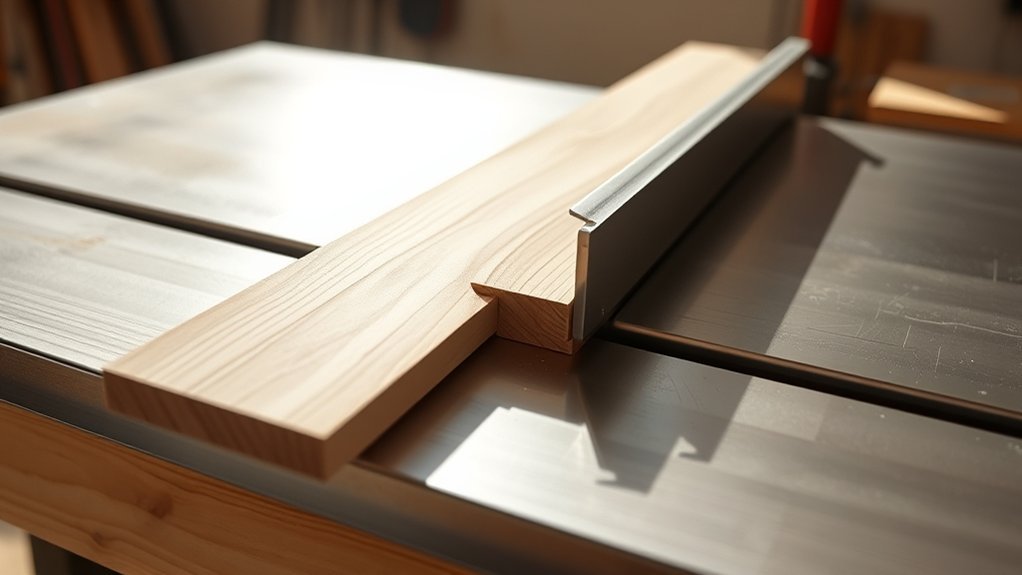
Rip capacity on a table saw refers to the maximum width of material you can cut by pushing it along the fence parallel to the blade. This measurement is vital because it determines the largest piece of stock the saw can handle in a single pass.
When you assess rip capacity, you’re fundamentally looking at the distance between the saw blade and the fence’s farthest position. A larger rip capacity means you can cut wider boards without needing to reposition them or make multiple cuts.
Understanding this specification helps you select a table saw that fits your project needs. Since rip capacity varies between models, knowing the exact width you can work with guarantees you avoid limitations during woodworking tasks.
Why Does Rip Capacity Matter for Woodworking Projects?
You need sufficient rip capacity to handle larger material sizes without multiple passes, which directly impacts precision and reduces error. A wider rip capacity also allows for more accurate, straight cuts, improving the overall quality of your work.
Ultimately, this enhances your project efficiency by minimizing setup time and material waste.
Maximizing Material Size
Three key reasons highlight why maximizing material size is essential for woodworking projects. First, it directly impacts your ability to handle larger stock without multiple cuts, thereby maximizing efficiency.
When your table saw’s rip capacity accommodates wide boards, you reduce the need for additional tools or setups. Second, by optimizing workspace, you prevent clutter from excess material handling and simplify workflow.
Adequate rip capacity lets you confidently maneuver bigger panels, maintaining a streamlined environment. Third, larger material size capability enables broader project scope, allowing you to work on substantial pieces or wide panels without compromise.
Fundamentally, ensuring your table saw’s rip capacity aligns with your material dimensions is critical for effective, safe, and professional woodworking.
Enhancing Cutting Precision
Maximizing material size on your table saw sets the stage for more than just handling larger pieces. It directly influences your cutting precision.
When your rip capacity matches or exceeds your material dimensions, you gain the ability to apply advanced cutting techniques without constraints. This means you can make longer, uninterrupted cuts that maintain alignment, reducing the risk of deviation.
Precision adjustments become more effective since the material rests securely against the fence and table, minimizing vibration and movement during the cut. Without adequate rip capacity, you might be forced to reposition or support the workpiece awkwardly, introducing errors.
Improving Project Efficiency
Although rip capacity might seem like a straightforward specification, it plays an essential role in streamlining your workflow and reducing project time. When you understand its impact, you’ll enhance workflow optimization and refine project planning. Here’s why rip capacity matters for improving project efficiency:
- Material Handling: A larger rip capacity lets you cut wider boards in a single pass, minimizing repositioning and setup time.
- Cutting Consistency: Maintaining consistent rip width reduces errors and rework, directly saving time and resources.
- Versatility: Adequate rip capacity accommodates diverse project requirements, allowing smoother shifts between tasks without tool changes.
What Rip Capacities Do Different Table Saws Have?
How much rip capacity do you really need for your projects? When comparing table saw types, you’ll find that portable saws typically offer rip capacities around 18 to 25 inches, ideal for smaller tasks and occasional use.
Contractor saws often provide 25 to 30 inches, balancing mobility and cutting width. Cabinet saws, designed for professional workshops, generally offer rip capacities exceeding 30 inches, allowing you to handle wider stock effortlessly.
Hybrid saws fall between contractor and cabinet saws, usually providing around 30 inches of rip capacity. Understanding this rip capacity comparison helps you choose a table saw that matches your material size requirements without overpaying for unnecessary width.
Selecting the right rip capacity guarantees precision and efficiency, streamlining your workflow according to the demands of your woodworking projects.
How Does Rip Capacity on a Table Saw Affect Wood Size?
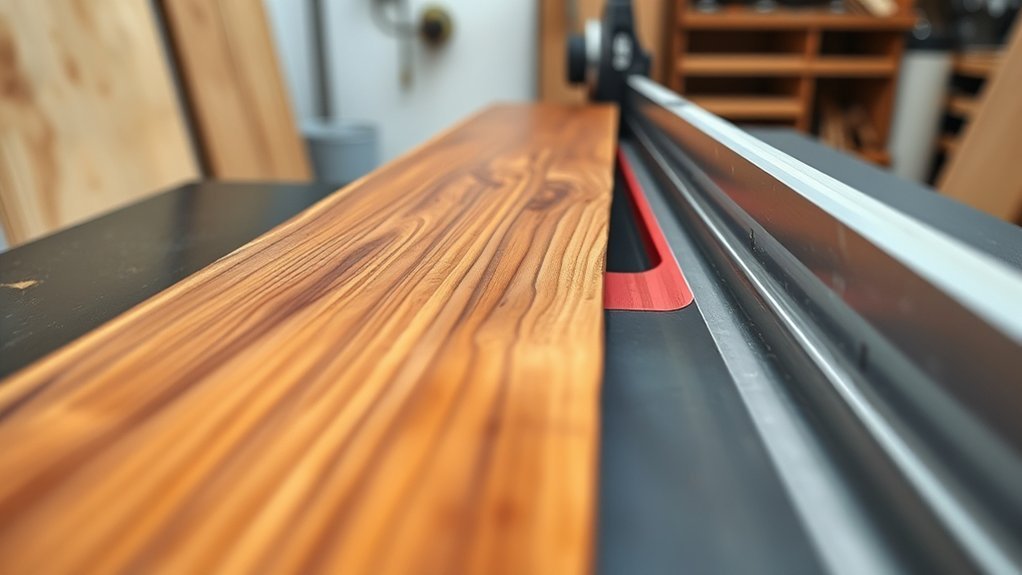
Choosing a table saw with the right rip capacity directly influences the size of wood you can work with efficiently. Rip capacity defines the maximum distance between the blade and the fence, setting the cutting limits for your wood sizes.
Here’s how it affects your work:
- Material Width: Larger rip capacity lets you cut wider boards in a single pass, reducing the need for multiple cuts and increasing accuracy.
- Project Scope: For bigger projects involving wide panels or sheets, sufficient rip capacity guarantees you can handle all materials without switching tools.
- Efficiency and Safety: Working within proper cutting limits prevents overextending the saw, minimizing risks of binding or kickback.
Understanding rip capacity helps you select a saw tailored to your wood sizes and project demands, optimizing performance and safety.
How Do You Measure Table Saw Rip Capacity?
To measure your table saw’s rip capacity, start by evaluating the distance between the rip fence and the blade’s outer edge. This blade-to-fence span determines the maximum width of material you can safely cut.
Understanding this measurement guarantees you select a saw that accommodates your project’s board sizes accurately.
Measuring Rip Fence Distance
Although measuring the rip fence distance may seem straightforward, accurately determining your table saw’s rip capacity requires careful attention to the exact position of the fence relative to the blade. To guarantee precision, follow these measuring techniques:
- Release the fence and slide it toward the blade until it almost touches the blade’s outer edge without making contact.
- Use a reliable measuring tape or ruler to measure from the blade’s outer edge to the inside edge of the fence, noting this as your rip fence distance.
- Make fence adjustments as needed, locking the fence firmly in place to confirm consistent measurement.
Blade to Fence Span
Measuring the rip fence distance sets the stage for understanding your table saw’s rip capacity, but the key dimension is the blade to fence span. This span is the actual cutting width you can achieve, determined by precise blade alignment and accurate fence adjustment.
To measure it, position the fence parallel to the blade, then measure from the blade’s outer edge to the fence’s inner edge. Proper blade alignment guarantees the cut is straight, while fence adjustment assures consistent spacing.
| Component | Measurement Point | Notes |
|---|---|---|
| Blade Outer Edge | Closest tooth edge | Critical for accurate span |
| Fence Inner Edge | Nearest surface to blade | Must be parallel and stable |
| Span Distance | Between blade & fence edges | Defines rip capacity |
| Alignment Check | Blade parallel to fence | Guarantees cut precision |
| Adjustment Method | Fence locking mechanism | Secures measurement |
Maximum Board Width Capacity
When you want to determine your table saw’s maximum board width capacity, you need to take into account the full range of the rip fence’s adjustment along with the blade positioning. Different table saw types offer varying rip capacities, so measuring accurately is crucial.
Here’s how you do it:
- Measure from the blade’s outer edge to the farthest position of the rip fence to find the maximum board width that can be cut.
- Confirm the blade is centered and adjust the fence accordingly to guarantee consistent measurement.
- Consider the saw’s throat plate and extension wings, as these affect how wide a board you can safely rip.
Common Rip Capacity Mistakes When Choosing a Table Saw
Since rip capacity determines the maximum width of material you can cut, underestimating its importance often leads to choosing a table saw that can’t handle your project requirements. One common rip capacity misconception is assuming the maximum rip width listed by manufacturers always reflects practical capability; often, real-world constraints like fence stability and motor power limit effective rip capacity.
When selecting table saws, you might also overlook the significance of left versus right tilting blades, which can affect rip capacity and material support. Another mistake is ignoring future needs. Buying a saw with just enough capacity for current projects may force costly upgrades later.
To avoid these pitfalls, assess both the specified rip capacity and the saw’s overall design to guarantee it meets your cutting demands precisely.
How Can You Increase Rip Capacity With Accessories?
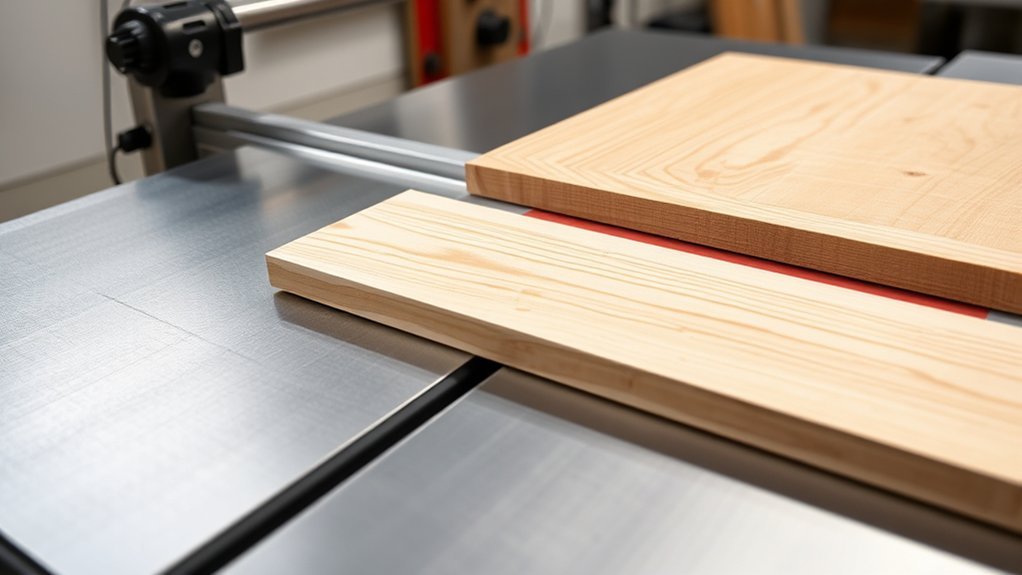
Although a table saw’s built-in rip capacity sets its baseline, you can greatly extend it with the right accessories. To maximize rip capacity enhancements, consider these table saw accessories:
- Outfeed Tables and Extensions: These support longer material, allowing you to rip wider boards safely beyond the saw’s original capacity.
- Rip Fences with Extended Rails: Upgrading to a fence system with longer rails increases the maximum distance from the blade, directly expanding rip capacity.
- Auxiliary Fence Attachments: These provide additional guide surfaces and can be mounted on existing fences to handle wider stock without compromising accuracy.
How Do You Match Rip Capacity to Your Project Needs?
To effectively match rip capacity to your project needs, you’ll need to assess the maximum width of the material you plan to cut and the dimensions of your finished pieces.
Begin by defining your project requirements precisely. Consider the largest panel or board width you’ll regularly handle. This data directly influences your saw selection, guaranteeing the rip capacity accommodates both current and potential future tasks.
Opting for a saw with insufficient rip capacity may limit your efficiency and force additional setups or cuts. Conversely, oversizing the capacity can increase costs and reduce workspace efficiency.
Balance your needs by evaluating typical material sizes, factoring in any expansions with accessories. This strategic approach guarantees your table saw’s rip capacity aligns perfectly with your workflow, optimizing performance and productivity.
Frequently Asked Questions
Can Rip Capacity Affect the Accuracy of Cuts?
Yes, if your rip capacity doesn’t accommodate your material width, you might compromise cut precision. Ensuring sufficient rip capacity lets you support wider materials properly, reducing vibration and improving accuracy during cuts.
Does Rip Capacity Influence the Type of Blade Used?
Though rip capacity doesn’t dictate blade types directly, it influences your blade choice by determining material size. Matching blade types to rip capacity optimizes cutting efficiency, ensuring precise, smooth cuts without overburdening your saw’s capabilities.
How Does Rip Capacity Impact Safety During Operation?
Rip capacity impacts saw stability and operator positioning by dictating how far you can safely push material. If you exceed it, you risk imbalance and improper stance, increasing the chance of kickback or loss of control during operation.
Are There Brands Known for Larger Rip Capacities?
You’ll find brands like SawStop and DeWalt leading rip capacity comparisons with larger cutting widths. When evaluating table saw brands, consider their rip capacity specs to guarantee they meet your precise project requirements efficiently.
Can Rip Capacity Be Adjusted on Portable Table Saws?
You’ll find rip capacity on portable table saws often tied to adjustable features like extendable fences or sliding wings. These portable designs offer flexibility, symbolizing adaptability in your workshop’s evolving landscape.
Conclusion
Understanding rip capacity on your table saw isn’t just a minor detail—it’s the difference between effortlessly slicing through massive hardwood slabs and wrestling with awkward, unsafe cuts.
If you underestimate it, you might as well try fitting an elephant into a shoebox. By precisely matching rip capacity to your project needs, you guarantee flawless accuracy, enhanced safety, and ultimate control.
Don’t let rip capacity be your woodworking Achilles’ heel—master rip capacity on your table saw, and your craftsmanship will soar.