Yes, applying tung oil will mildly darken your wood by penetrating fibers and enhancing natural grain patterns with a warm amber tint.
The degree of darkening depends on factors like wood type, oil purity, and the number of coats applied. Denser, open-grained woods such as teak or mahogany tend to darken more noticeably.
Tung oil darkens wood less than stains or varnishes and dries slowly, allowing for deeper penetration.
If you want to understand how to minimize darkening or reverse it later, exploring application techniques and wood-specific effects will be helpful.
What Happens to Wood Color and Grain When You Apply Tung Oil?

When you apply tung oil, the wood’s color typically deepens, enhancing its natural warmth without causing significant darkening. During tung oil application, the oil penetrates the wood fibers, filling microscopic pores and creating a protective barrier.
This process accentuates the wood grain enhancement by highlighting the natural patterns and texture, making the grain more visually pronounced. Tung oil’s molecular structure allows it to bond with the wood fibers, preserving the original hue while imparting a slight amber tint.
The finish remains matte to semi-gloss, depending on the number of coats applied. Proper tung oil application guarantees the wood’s aesthetic features are emphasized without altering the fundamental color balance, making it an excellent choice for showcasing the wood’s inherent beauty with subtle depth and clarity.
How Much Does Tung Oil Really Darken Wood?
You’ll notice that the degree to which tung oil darkens wood varies depending on the wood species and its natural color. Denser, open-grain woods tend to absorb more oil, resulting in a more pronounced darkening effect.
Understanding these factors helps you predict the final appearance after application.
Color Change Intensity
Several factors influence how much tung oil will darken wood, including the wood species, the number of coats applied, and the oil’s purity. When evaluating color change intensity, you’ll notice that tung oil typically imparts a warm, amber tone, but the extent varies due to inherent color variations in the wood.
Application techniques also play a critical role: a single thin coat results in minimal darkening, while multiple heavy coats increase saturation and depth. Additionally, pure tung oil tends to produce more consistent color changes compared to blends or diluted versions.
To control darkening, you should apply thin layers, allowing full absorption and drying between coats. This method guarantees a predictable color shift and prevents overly dark or blotchy finishes, optimizing both protection and aesthetic appeal.
Wood Type Influence
Although tung oil generally darkens wood by adding a warm, amber hue, the degree of this effect varies considerably depending on the wood species. You’ll notice that woods with open grain structures, like oak and ash, absorb tung oil differently compared to denser woods like maple or cherry.
This variation arises from distinct wood characteristics such as porosity, tannin content, and natural color. The oil interaction with these factors influences both absorption depth and color intensity.
For instance, woods high in tannins tend to darken more dramatically due to chemical reactions with the oil. Conversely, lighter, less porous woods may exhibit only subtle darkening.
Understanding your wood’s specific traits helps predict the final appearance after tung oil application, enabling more controlled and desirable finishing outcomes.
Which Types of Wood Darken the Most With Tung Oil?
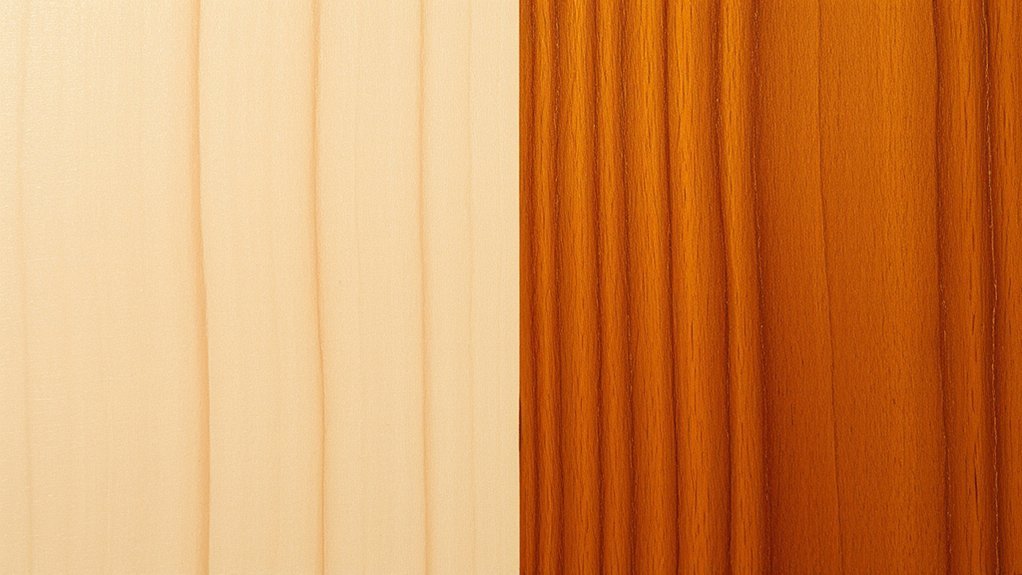
You’ll notice that woods with higher oil absorption tend to darken more noticeably when treated with tung oil. Lighter woods, in particular, often exhibit a more dramatic deepening of color compared to darker species.
Additionally, exotic woods may respond differently than domestic varieties due to their unique grain structures and natural oils.
Woods With High Oil Absorption
Wood species with high oil absorption tend to darken more noticeably when treated with tung oil due to their porous cellular structure. Different oil types interact uniquely with woods based on absorption rates, influencing final color depth.
When applying tung oil, you’ll observe that woods with greater porosity soak up more oil, intensifying darkening. Here’s a comparison of common high-absorption woods:
| Wood Species | Absorption Characteristics |
|---|---|
| Teak | High oil retention, deep darkening |
| Mahogany | Moderate absorption, rich tone |
| Walnut | High absorption, pronounced darkening |
| Cherry | Moderate-high absorption, warm hue |
| Oak | Variable absorption, moderate darkening |
Understanding these absorption rates helps you predict the degree of color change when finishing your project with tung oil.
Lighter Woods Darkening Effects
While lighter woods generally absorb less tung oil than darker, more porous species, they can still experience noticeable darkening depending on their grain density and natural oils. Light wood varieties such as maple, birch, and ash often exhibit moderate color shifts when treated with an oil finish.
The extent of darkening correlates with the wood’s porosity and resin content; denser grains absorb less oil but the surface sheen intensifies. Tung oil penetrates the cellular structure, enhancing natural hues and causing a warm amber tint that deepens the original tone without obscuring grain patterns.
If you’re working with light wood and desire minimal color change, multiple thin coats with thorough drying between applications can help control the oil finish’s darkening effect while preserving clarity and texture.
Exotic Vs. Domestic Woods
Although both exotic and domestic woods respond to tung oil by darkening, the degree varies considerably due to differences in their cellular structure and natural resin content. Exotic woods often have denser fibers and higher resin levels, which can lead to a more pronounced darkening effect.
Domestic woods, generally less dense with lower resin content, may show subtler changes. When applying tung oil, consider these key points about exotic and domestic woods:
- Exotic woods like rosewood and mahogany absorb tung oil deeply, resulting in richer, darker hues.
- Domestic woods such as pine and oak tend to lighten slightly or develop a warm amber tone.
- The pore size in exotic woods influences oil retention, affecting color intensity.
- Resinous exotic woods darken more uniformly.
- Domestic woods may require multiple coats for desired depth.
Understanding these differences helps you predict tung oil’s impact accurately.
How Does Drying Time Affect Tung Oil’s Impact on Wood Color?

Because drying time influences the extent of tung oil’s polymerization, it directly affects how the wood’s color deepens and develops. When tung oil dries slowly, it allows for more thorough oil penetration into the wood’s cellular structure.
This prolonged drying effect results in a richer, darker hue as the oil oxidizes and hardens within the fibers. Conversely, faster drying limits penetration, producing a lighter finish with less color alteration.
You should also consider that multiple coats extend total drying time, amplifying the darkening effect. Additionally, environmental factors such as humidity and temperature influence drying rates, thereby impacting color outcomes.
Understanding these drying effects enables you to predict and control how tung oil will modify your wood’s appearance over time.
Tips to Minimize Wood Darkening When Using Tung Oil
How can you effectively reduce the darkening effect of tung oil on your wood projects? Proper wood preparation and precise application techniques are key. Start by sanding the wood smoothly to guarantee even absorption, as rough surfaces can deepen color inconsistencies.
Next, apply thin, controlled coats rather than heavy layers to limit excess oil penetration.
Consider these tips to minimize wood darkening:
- Thoroughly clean and dry wood before oiling to prevent unwanted reactions.
- Use a brush or lint-free cloth for uniform application.
- Wipe off excess oil within 15–30 minutes to avoid saturation.
- Allow adequate drying time between coats to prevent buildup.
- Test on a scrap piece to gauge color changes before full application.
Following these steps helps you maintain the wood’s natural tone while benefiting from tung oil’s protective qualities.
How Does Tung Oil Darkening Compare to Other Wood Finishes?
When comparing tung oil to other common wood finishes, you’ll notice it tends to darken wood less aggressively than oil-based varnishes or stains. Tung oil penetrates the wood fibers deeply, enhancing the natural grain without greatly altering the base color.
Unlike polyurethane or lacquer, which form surface films that can create a glossy, darker appearance, tung oil’s matte finish preserves the wood’s inherent tone while offering excellent water resistance. This subtle darkening aligns with tung oil benefits, emphasizing wood preservation by maintaining breathability and flexibility.
Stains and varnishes often introduce pigments or solvents that intensify color change, whereas tung oil’s pure composition minimizes such effects. As a result, if you want durable protection with minimal color shift, tung oil is a superior choice for maintaining wood’s natural aesthetics.
Can You Lighten Wood After Tung Oil Darkens It?
Is it possible to lighten wood after tung oil has darkened it? Yes, but you’ll need to apply specific lightening techniques carefully. Tung oil penetrates deeply, so surface sanding alone often isn’t enough.
Lightening wood after tung oil darkening is possible but requires careful, specialized techniques beyond surface sanding.
Wood bleaching is a common approach to reverse darkening. Here’s what you should consider:
- Use a two-part wood bleach (oxalic acid followed by a neutralizer) for effective color correction.
- Test bleaching on a small, inconspicuous area first to gauge results.
- Avoid harsh sanding, which can damage the wood grain.
- Neutralize and thoroughly dry the wood after bleaching to prevent further damage.
- Reapply tung oil in light coats afterward to regain protection without excessive darkening.
These steps help you restore the wood’s original tone while maintaining its integrity after tung oil darkening.
Choosing Tung Oil Blends That Cause Less Darkening
If you want to minimize the darkening effect of tung oil on your wood, selecting the right blend is key. Tung oil blends vary in formulation; some contain additives or solvents that influence drying time and color impact.
For better color preservation, opt for pure or lightly modified tung oil blends, as these tend to impart less amber tint. Blends diluted with mineral spirits or polymer additives often deepen wood tone more noticeably.
You should also consider blends labeled as “clear” or “light,” designed specifically to reduce darkening while maintaining protective qualities. Testing your chosen tung oil blend on a scrap piece before full application allows you to assess its effect on your wood’s natural color and guarantee ideal color preservation without compromising finish quality.
Frequently Asked Questions
Is Tung Oil Safe for Food-Contact Wooden Utensils?
Yes, you can use tung oil on food-contact wooden utensils. Tung oil benefits include a natural, non-toxic finish that enhances food safety by creating a water-resistant, durable surface. This prevents contamination and prolongs utensil lifespan effectively.
How Long Does Tung Oil Take to Fully Cure?
Like waiting for winter’s thaw, tung oil’s cure time typically spans 7 to 30 days. You’ll find environmental factors such as humidity and temperature greatly influence this. Guarantee proper ventilation and conditions for ideal curing results.
Can Tung Oil Be Used Outdoors Without Additional Protection?
You can’t rely solely on tung oil durability for outdoor application; it offers moderate water resistance but needs additional protection, like a UV-resistant finish, to prevent weathering and maintain wood integrity over time.
What Is the Best Method to Apply Tung Oil Evenly?
You should use a high-quality natural bristle brush for application techniques, applying thin, even coats. Work with the grain, maintaining a wet edge to avoid streaks, and wipe off excess oil after 15 minutes for uniform absorption.
Does Tung Oil Have a Strong Odor During Application?
Tung oil’s application odor is mild compared to other finishes, but you might notice a slightly nutty scent during use. Proper ventilation reduces odor impact, ensuring a safer, more comfortable application environment for you.
Conclusion
So, does tung oil really darken wood? Yes, it does, but the extent varies by wood type and drying time. You might expect a richer, warmer tone rather than a drastic color shift.
Notably, lighter woods show more noticeable darkening, while some blends minimize this effect. If you want to keep your wood’s original shade, controlling application thickness and drying conditions is key.
Remember, tung oil’s darkening is more about enhancing grain than altering color drastically. Ultimately, whether tung oil darkens wood significantly depends on how it’s applied and the wood species involved.