You can buy wood for woodworking from a variety of sources including lumberyards, specialty woodworking shops, big-box stores, and online suppliers.
Lumberyards typically offer higher-quality, kiln-dried wood along with expert advice to help you choose the right materials.
Big-box stores provide affordability and convenience but the quality of wood can vary.
Specialty shops often carry exotic and reclaimed woods and provide personalized service tailored to your needs.
Online suppliers offer a wide selection of wood and make it easy to compare prices and types from the comfort of your home.
When choosing where to buy wood for woodworking, consider the type of wood, its grade, and the specific requirements of your project.
Exploring these options ensures you make the smartest choice for your woodworking needs.
How to Choose the Right Wood and Supplier for Your Project

Before you buy any wood, it’s essential to identify the specific needs of your project, including the type of wood, its grain, hardness, and how it will respond to finishing. Start by applying wood selection tips: choose wood that matches your project’s durability and appearance requirements.
Consider moisture content to avoid warping. When selecting a supplier, look for those with good reputations and verified customer reviews. Supplier recommendations from experienced woodworkers can guide you toward reliable sources offering quality lumber.
Verify their stock variety and check if they provide kiln-dried wood for stability. Don’t overlook delivery options and return policies. By combining precise wood selection with trusted supplier recommendations, you’ll guarantee your woodworking project begins with the right materials, saving time and preventing costly mistakes.
What Types of Wood Work Best for Different Woodworking Projects
When selecting wood for your woodworking project, understanding the characteristics of different wood types is essential to achieving the desired strength, appearance, and workability. Hardwood options like oak, maple, and cherry are ideal for furniture and flooring due to their durability and fine grain, which also take finishes well.
For projects requiring lighter weight or easier cutting, softwood alternatives such as pine or cedar offer affordability and workability, making them perfect for framing, shelving, or decorative pieces. Consider the environment too; cedar resists moisture, great for outdoor projects.
Each wood type brings specific qualities, so match hardwoods to high-stress, visible elements and softwoods to less demanding, cost-sensitive parts. Knowing these distinctions will help you select wood that fits both function and aesthetics precisely.
How to Spot Quality Wood Before You Buy
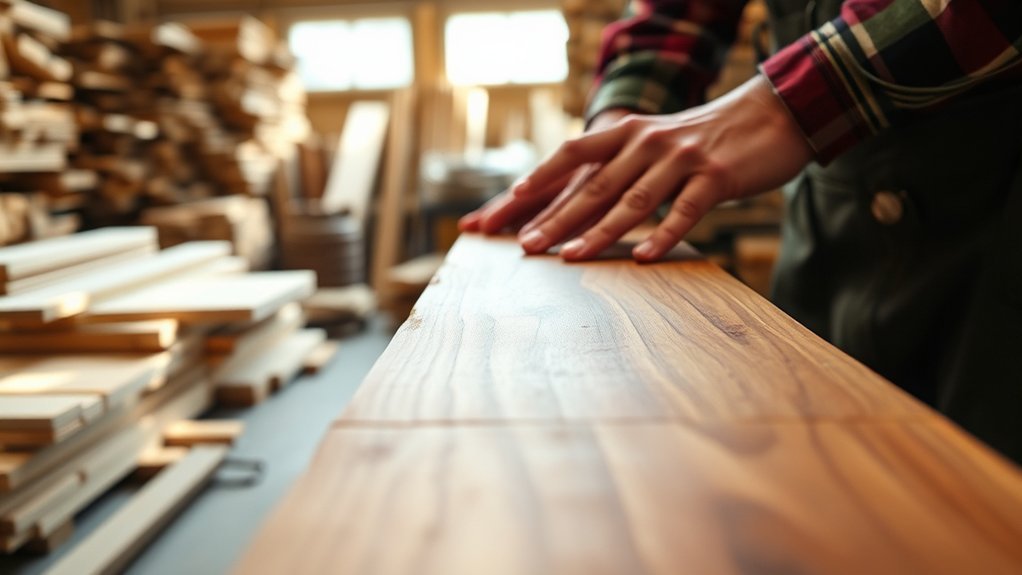
Before you buy, check the wood’s grain patterns and density to guarantee it matches your project’s strength and appearance needs. Use a moisture meter to confirm the wood’s moisture content is within the ideal range, typically 6-8% for indoor projects. These steps help you avoid warping and guarantee long-lasting results.
Grain Patterns And Density
Two key factors that determine the quality of wood for your woodworking projects are grain patterns and wood density. When examining grain patterns, look for consistent, tight lines, as they indicate better grain stability, reducing warping or twisting over time.
Straight, uniform grain is generally more reliable than irregular or wavy patterns, which can complicate cutting and finishing.
Wood density also plays a significant role in wood characteristics. Denser woods tend to be stronger and more durable but may require sharper tools to work with.
Lighter woods are easier to shape but might lack long-term resilience. By evaluating grain stability alongside density, you guarantee you select wood that holds up structurally and visually, giving your project both beauty and longevity.
Moisture Content Check
Although grain patterns and density are essential, moisture content plays an equally important role in determining wood quality. Before buying, you should perform moisture testing using a reliable moisture meter. Aim for wood with a moisture content between 6% and 8%, ideal for indoor woodworking projects.
Higher moisture levels can cause warping, splitting, or shrinkage later. Ask sellers about their drying techniques. Proper kiln drying guarantees stabilized wood ready for use. Avoid wood that feels damp or has visible mold, signs of inadequate drying.
If you can’t test moisture on-site, request recent moisture readings or drying certificates. By prioritizing moisture content and understanding drying methods, you’ll select wood that’s stable, durable, and suited for precise woodworking tasks. This step saves you time and prevents costly mistakes down the line.
Lumberyards vs. Big-Box Stores: Pros and Cons for Wood Buyers
Choosing where to buy wood can greatly impact both the quality of your projects and your budget. When comparing lumberyards and big-box stores, consider lumber quality and pricing differences carefully.
Lumberyards typically offer higher-quality, kiln-dried wood with fewer defects, ideal for fine woodworking. Big-box stores often provide more affordable options but may carry wood with inconsistent moisture content and defects.
Here’s what to keep in mind:
- Lumberyards have knowledgeable staff who can help select the right wood.
- Big-box stores offer convenience and a wide range of materials.
- Pricing differences often reflect wood quality and service levels.
- Availability at lumberyards might be limited to local species or sizes.
Weigh these factors to choose the best source for your specific woodworking needs.
Specialty Woodworking Shops: Best Places to Buy Wood for Your Projects

When you’re looking for specialty woods like exotic hardwoods or figured maple, expert woodworking shops offer a wider selection than general retailers. These shops provide valuable advice and often source unique lumber suited to your specific project needs.
To get the best options, start by locating local suppliers who focus exclusively on woodworking materials.
Types Of Specialty Woods
Since specialty woods often come with unique characteristics and higher quality, you’ll want to seek out shops that focus exclusively on these materials. These stores typically offer exotic hardwoods known for their rich colors and durability, perfect for fine furniture or intricate carvings.
You might also find reclaimed timber, which provides a rustic look and sustainability benefits. Specialty shops often carry figured woods, prized for their distinctive grain patterns, and rare domestic species that aren’t widely available.
When selecting your wood, consider:
- Exotic hardwoods like teak, mahogany, and rosewood
- Reclaimed timber from old barns or factories
- Figured woods such as birdseye maple or quilted cherry
- Rare domestic species like black walnut or curly maple
Choosing from these guarantees your project stands out with quality and character.
Benefits Of Expert Shops
Specialty woodworking shops stand out because they offer more than just a wide selection of unique woods. They provide expert guidance tailored to your project’s needs. When you visit, you benefit from expert advice that helps you choose the right wood species, grade, and cut, ensuring your materials perfectly match your design and durability requirements.
These shops deliver personalized service, taking time to understand your skill level and project goals, which can save you costly mistakes. Plus, their staff can recommend finishing techniques or complementary tools. This hands-on support makes your buying experience efficient and confidence-inspiring.
If you value precision and quality, expert shops are invaluable. They equip you with both premium materials and knowledge essential for successful woodworking projects.
Finding Local Wood Suppliers
Although it might take some effort, finding local wood suppliers can greatly enhance your woodworking projects by giving you access to high-quality materials and personalized service. Start by visiting local sawmills, where you can select fresh, often kiln-dried lumber with expert advice.
Joining woodworking clubs connects you with experienced craftsmen who share tips on sourcing rare or specialty woods nearby. Specialty woodworking shops often stock hard-to-find species and offer custom-cut options tailored to your project.
Look for these when hunting local suppliers:
- Fresh-sawn boards stacked at local sawmills
- Recommendations and wood swaps within woodworking clubs
- Specialty shops offering exotic hardwoods and custom cuts
- Notice boards advertising timber sales or auctions nearby
Comparing Online Wood Suppliers: Convenience and Selection
When you’re shopping for wood online, convenience and selection are two key factors that can make or break your experience. Online wood sourcing lets you browse extensive inventories from the comfort of your workspace, saving time and travel costs.
When making supplier comparisons, focus on their range of wood species, grades, and sizes available. Check for detailed product descriptions and clear photos. These details help guarantee you order the right material.
Also, consider shipping options and delivery times; a supplier with reliable, affordable shipping enhances convenience greatly. Some suppliers offer custom milling services online, expanding your options further.
How to Read Wood Grades and Sizes for Your Project
Understanding wood grades and sizes is essential for selecting the right material that meets your project’s structural and aesthetic requirements. Wood grading reflects the quality, durability, and appearance of the lumber, while size measurement guarantees it fits your design perfectly.
When you read wood grades and sizes, focus on:
- Grade stamps indicating strength and visual characteristics
- Nominal vs. actual dimensions (e.g., a 2×4 is actually 1.5×3.5 inches)
- Moisture content affecting wood stability and finish
- Imperfections noted in grading like knots or splits that impact usability
Tips to Save Money When Buying Wood for Woodworking
Knowing how to read wood grades and sizes sets a solid foundation, but saving money on your wood purchases requires a few smart strategies. First, consider bulk buying if your project demands large quantities. Suppliers often offer significant discounts for larger orders. This approach reduces the cost per board and minimizes multiple shipping fees.
Next, always search for discount codes before purchasing; many online retailers provide promo codes that can lower your total price. Don’t hesitate to subscribe to newsletters from lumber suppliers, as they frequently send exclusive deals. Additionally, compare prices between local lumberyards and big-box stores, as prices can vary widely.
Finding Sustainable and Eco-Friendly Wood for Your Projects
Why should you prioritize sustainable and eco-friendly wood for your projects? Choosing wood from sustainable sourcing helps protect forests and reduces your environmental impact. When looking for eco friendly options, you guarantee that the wood is harvested responsibly without depleting natural resources.
To find sustainable wood, consider these practical tips:
- Look for certifications like FSC or PEFC on lumber labels.
- Source reclaimed or salvaged wood from demolition sites or old furniture.
- Buy from local suppliers who practice responsible forestry.
- Opt for fast-growing species such as bamboo or eucalyptus, which regenerate quickly.
Frequently Asked Questions
Can I Ship Wood Internationally for My Woodworking Projects?
Yes, you can ship wood internationally for your woodworking projects, but you’ll need to comply with regulations like phytosanitary certificates and fumigation requirements to prevent pests.
Check each country’s rules to avoid delays or fines.
What Tools Do I Need to Properly Store Purchased Wood?
You know what they say, “A stitch in time saves nine.” For proper wood storage, you’ll need a moisture meter, dehumidifier, and air circulation tools to maintain humidity control.
These tools help prevent warping or cracking over time.
How Long Does Freshly Cut Wood Need to Dry Before Use?
Freshly cut wood generally needs 6 months to 2 years to dry properly. Use drying techniques like air drying or kiln drying to reduce moisture content to 6-8%, ensuring it’s stable and ready for woodworking projects.
Are There Any Legal Restrictions on Buying Certain Types of Wood?
You should know over 1,000 tree species are protected under international legal regulations. So, you can’t buy wood from endangered species without permits, ensuring sustainable woodworking and compliance with conservation laws to avoid hefty penalties.
Can I Return Wood if It’s Damaged or Not Suitable?
You can return damaged wood if the store’s return policies allow it. Always check their specific terms beforehand, as some sellers require proof of damage or limit return timeframes.
These restrictions help guarantee suitability for your woodworking projects.
Conclusion
When it comes to buying wood for your projects, you’re not just picking timber—you’re setting the foundation for success. Whether you choose a lumberyard, specialty shop, or online supplier, knowing how to spot quality and understand wood grades will save you time and frustration.
Keep an eye out for sustainable options to feel good about your choices. With these insights, you’ll be well-equipped to find wood that’s just right, without any unexpected knots in your plans.
To ensure the best results, consider where you buy wood for woodworking carefully. Selecting the right source helps guarantee quality and availability for your specific needs.