A router machine for woodworking is a high-speed tool designed to hollow, shape, and profile wood with precision. This versatile tool is essential for creating detailed edges, grooves, and intricate designs.
You’ll find handheld models ideal for freeform work and table routers suited for repetitive, stable tasks. Key features include adjustable speed, power, and accurate depth control to match various woodworking needs.
Choosing the right bit—such as straight, chamfer, or round-over—depends on your specific project requirements. Safe setup and maintaining consistent feed rates are crucial for achieving clean, precise cuts.
Routine maintenance ensures the router stays sharp and performs reliably. Exploring these details will help you master effective and safe routing techniques for all your woodworking projects.
What Is a Router Machine and How Does It Work
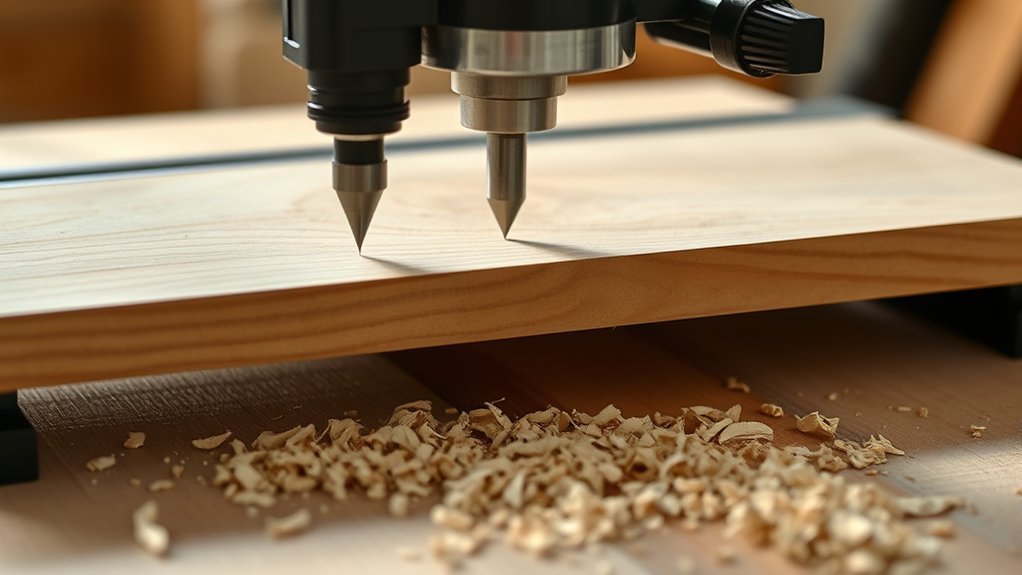
A router machine is a versatile power tool designed for hollowing out an area in wood, commonly used in woodworking projects. Understanding router machine basics is essential for precise wood shaping, edge profiling, and joinery.
You operate the router by guiding its spinning bit along the wood surface, which removes material to create grooves or decorative edges. The router’s motor spins the bit at high speeds, allowing clean cuts with minimal tear-out.
Mastering woodworking techniques with a router involves controlling depth and feed rate to achieve consistent results. You’ll also need to select the appropriate bit shape and size for your specific task.
This tool enhances efficiency and accuracy in cabinetry, furniture making, and detailed woodcraft, making it indispensable for fine woodworking applications.
Different Types of Router Machines for Woodworking
Choosing the right router machine depends on your woodworking needs, as different types offer distinct capabilities and control features. Handheld routers provide versatility and portability, allowing you to maneuver freely for edge profiling, trimming, and intricate detailing. They’re ideal when working on large or irregularly shaped pieces.
Table routers, on the other hand, offer enhanced stability and precision by securing the router beneath a fixed table surface. This setup is perfect for repetitive tasks like grooving or shaping smaller components with consistent accuracy. Understanding these fundamental differences helps you select a router machine that aligns with your project scale and complexity.
Whether you prioritize mobility with handheld routers or precision with table routers, each type supports specific woodworking operations efficiently.
Key Features to Choose in a Woodworking Router
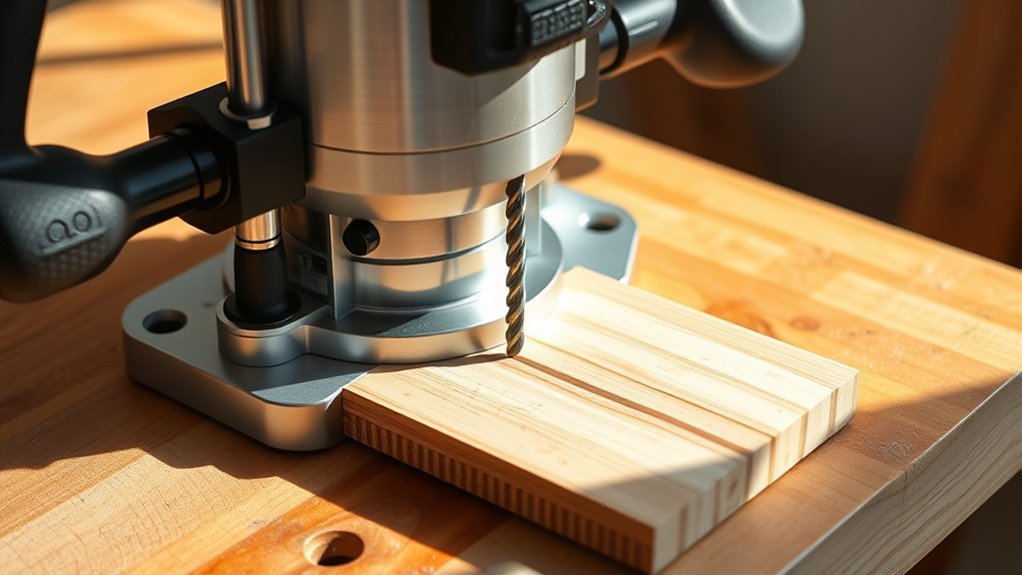
When selecting a woodworking router, you’ll want to prioritize power and adjustable speed to handle various materials and cuts efficiently. Precision is critical, so look for features that guarantee accurate depth control and smooth operation.
Durability also matters, as a robust build will withstand frequent use and maintain performance over time.
Power And Speed
Although power and speed might seem straightforward, they critically determine a router’s efficiency and the quality of your woodworking projects. You need a router that balances power efficiency with versatile speed settings to handle various materials and cuts.
- Choose a router with adjustable speed settings to optimize control and prevent burning the wood.
- Higher power ratings generally translate to better performance on dense hardwoods, but consider energy consumption for power efficiency.
- Look for models with consistent speed under load, ensuring smooth cuts without bogging down.
- Variable speed control allows you to match RPM to bit size, enhancing finish quality and tool longevity.
Precision And Durability
Since woodworking demands exact cuts and long-lasting tools, precision and durability are paramount in selecting a router. You need a machine built with precision engineering to guarantee smooth, accurate cuts every time.
Durable materials like hardened steel and reinforced aluminum extend the router’s lifespan, resisting wear and tear under heavy use. Components such as collets and bearings must maintain tight tolerances to avoid vibration, which can compromise cut quality.
Here’s a comparison to help you visualize these critical attributes:
| Feature | Precision Engineering | Durable Materials |
|---|---|---|
| Collet Accuracy | Tight grip for bit stability | Hardened steel for longevity |
| Base Plate | Exact flatness for balance | Reinforced aluminum alloy |
| Motor Housing | Precision-molded for cooling | Impact-resistant polymers |
| Bearings | Low-friction for smooth motion | Sealed for dust and debris |
Choosing a router with these features guarantees consistent performance and extended service life.
Choosing the Right Woodworking Router
How do you determine the best woodworking router for your specific projects? Start by evaluating your needs to match the router’s capabilities. Consider these four key factors:
- Power and Speed Control Confirm the motor wattage suits your materials and that variable speed settings are available for precision.
- Router Type Choose between fixed-base for stability or plunge routers for depth flexibility.
- Compatibility with Router Accessories Verify the router supports essential accessories like edge guides and dust collectors.
- Reliable Router Brands Opt for brands with proven durability and service support to guarantee long-term performance.
Common Router Bits and Uses
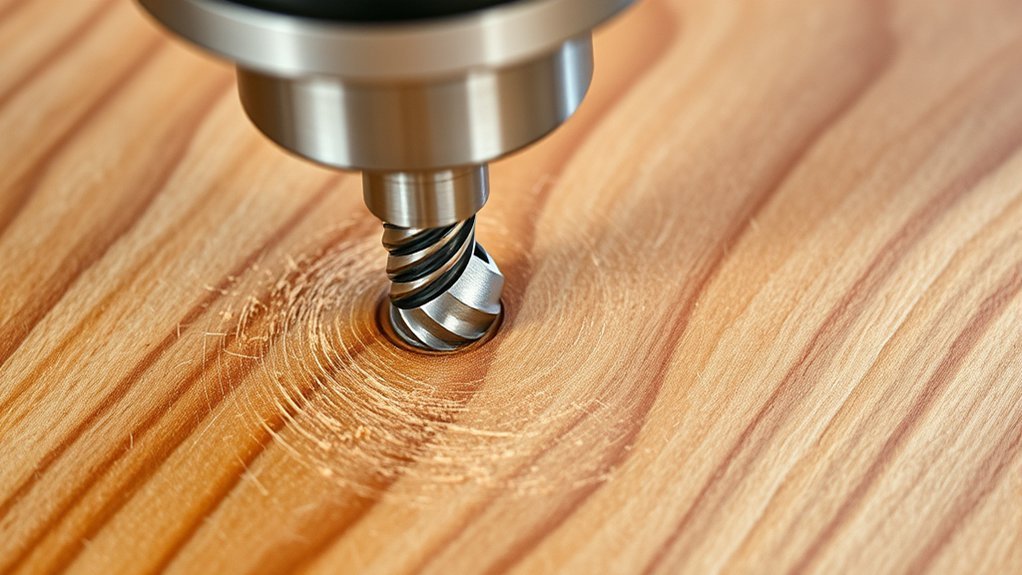
Once you’ve selected a router that fits your project requirements, understanding the variety of router bits available will greatly enhance your woodworking capabilities. Key router bit types include straight bits for clean grooves, flush-trim bits for edge alignment, chamfer bits for angled edges, and round-over bits to soften corners.
Each bit serves a distinct purpose, enabling precise cuts and detailed profiles. To maintain peak performance, regular router bit maintenance is essential. Clean debris buildup, inspect for dullness, and sharpen or replace bits as needed.
Proper maintenance not only prolongs bit life but also guarantees consistent cut quality and reduces the risk of burning wood. By mastering common router bit types and adhering to maintenance routines, you’ll improve both the efficiency and accuracy of your woodworking projects.
Setting Up Your Router Machine
Before you begin routing, setting up your router machine correctly is vital for safety and accuracy. Proper router setup guarantees stable operation and precise cuts. Start by securing the router bit firmly in the collet to prevent slippage.
Next, adjust the cutting depth accurately using the depth adjustment mechanism, confirming it matches your project specifications. Then, calibrate the router’s base plate so it sits flush against your workpiece, providing stability during operation.
Finally, check the router’s speed settings; different materials and bit sizes require specific speeds to optimize performance and prevent burn marks.
- Insert and tighten the router bit securely
- Set precise cutting depth with depth adjustment
- Align and stabilize the base plate on the workpiece
- Adjust speed settings appropriate for your material
These critical router adjustments form the foundation of effective woodworking.
Tips for Precise Cuts With Your Woodworking Router
Although setting up your router properly is essential, achieving precise cuts depends on maintaining consistent feed rates and steady control throughout the operation. To enhance cut accuracy, use router techniques like steady, deliberate movements aligned with the grain direction.
Avoid forcing the router; instead, let the bit do the work at an appropriate speed. Employ guides or fences to stabilize your path, minimizing deviations. Also, selecting the correct bit size and type for your material improves precision.
Routinely check bit sharpness, as dull bits compromise accuracy. Finally, practice on scrap wood first to refine your technique and adjust feed rates. By combining proper setup with disciplined router techniques, you guarantee clean, accurate cuts that elevate your woodworking projects’ quality.
Staying Safe When Using a Woodworking Router
When operating a woodworking router, you need to wear appropriate protective gear like safety glasses and hearing protection to prevent injury.
Mastering safe operating techniques, such as maintaining a firm grip and controlling feed rate, is vital to avoid kickbacks and guarantee accurate cuts. Prioritizing these safety measures will help you maintain control and work efficiently.
Proper Protective Gear
Because woodworking routers operate at high speeds and generate significant debris, you need to wear proper protective gear to minimize risks of injury. Ensuring your safety starts with selecting equipment designed to shield you effectively from hazards.
- Eye Protection: Use impact-resistant safety goggles or a face shield to guard against wood chips and dust.
- Protective Gloves: Choose snug-fitting gloves that allow dexterity while protecting your hands from splinters and accidental contact with the bit.
- Hearing Protection: Employ earplugs or earmuffs to prevent hearing damage from prolonged exposure to router noise.
- Dust Mask or Respirator: Wear a mask rated for fine particulate matter to avoid inhaling harmful wood dust.
Adhering to these protective measures reduces the likelihood of injury and enhances your focus during operation.
Safe Operating Techniques
Before you start using a woodworking router, it’s crucial to understand and apply safe operating techniques to prevent accidents and guarantee precise work. Always secure your workpiece firmly and make certain your hands stay clear of the bit’s path.
Use sharp, undamaged bits and verify the router’s speed settings match the material and bit specifications. Maintain consistent pressure and feed direction to avoid kickback.
Prioritize router safety by inspecting power cords and switches regularly, and perform routine router maintenance, such as cleaning dust from vents and lubricating moving parts. Disconnect power before changing bits or adjustments.
Never force the router; let the bit do the cutting. By following these safety measures and maintaining your router meticulously, you’ll achieve accuracy while minimizing risk.
Maintaining and Troubleshooting Your Woodworking Router
Although woodworking routers are designed for durability, regular maintenance is essential to secure peak performance and extend their lifespan. Proper router maintenance prevents common issues and guarantees precision in your cuts.
Regular maintenance keeps your woodworking router performing at its best and ensures precise, reliable cuts.
When troubleshooting, focus on these core areas:
- Inspect and clean the collet: debris can cause bit slippage and vibration.
- Check brushes and motor: worn brushes reduce power; replace if necessary.
- Lubricate moving parts: prevent overheating and wear by applying appropriate lubricants.
- Verify power supply and switches: faulty wiring or switch failure can cause intermittent operation.
Frequently Asked Questions
Can a Router Machine Be Used on Materials Other Than Wood?
Yes, you can use a router on various materials beyond wood, including plastics and soft metals. When selecting router materials and bits, make sure they’re suitable for non-wood applications to maintain precision and avoid damage.
What Is the Average Lifespan of a Woodworking Router?
Think of your router like a car. Regular tune-ups extend its life. Typically, a woodworking router lasts 5-10 years.
Proper router maintenance tips and lifespan factors, such as usage frequency and care, greatly influence durability.
Are There Cordless Router Machines Available for Woodworking?
Yes, cordless options are available for woodworking routers. You’ll want to evaluate battery performance carefully, as it impacts runtime and power consistency, especially during intensive tasks. This ensures your cordless router meets your precision and durability requirements.
How Noisy Is a Typical Woodworking Router During Operation?
You’ll encounter noise levels around 90 decibels, which can risk hearing damage over time. Proper router maintenance, like lubricating bearings and cleaning vents, helps minimize excess noise and guarantees efficient, quieter operation during woodworking tasks.
Can Beginners Learn to Use a Router Machine Easily?
Yes, you can learn router basics easily with patience. Focus on beginner tips like securing workpieces, controlling feed rate, and practicing on scrap wood.
This will help build confidence and precision before tackling complex woodworking projects with a router machine.
Conclusion
Now that you know a woodworking router can increase your precision by up to 80%, it’s clear why choosing the right machine matters. With the right router and bits, you’ll achieve cleaner cuts and more detailed designs.
Remember to set up your router properly and follow safety guidelines to avoid common pitfalls. Regular maintenance will keep your router running smoothly, ensuring your woodworking projects stay accurate and efficient every time.
Investing time in selecting and caring for your router machine for woodworking will greatly enhance the quality and consistency of your work.