Using tung oil on your cutting board provides a durable, water-resistant finish that enhances wood longevity and resists moisture and microbial damage.
It forms a tough, elastic film that protects against cracking and warping. This makes tung oil a popular choice for maintaining the quality of wooden cutting boards.
However, tung oil requires multiple coats and longer drying times to achieve the best results. It also needs periodic reapplication every few weeks for maximum protection.
While it is non-toxic when fully cured, it may not be suitable for all wood types or for users needing quick use after application.
Considering these pros and cons can help you decide if tung oil is the best finish for your cutting board.
Understanding the maintenance involved and the benefits it provides will ensure you choose the right treatment for your needs.
What Is Tung Oil and Why Use It on Cutting Boards?
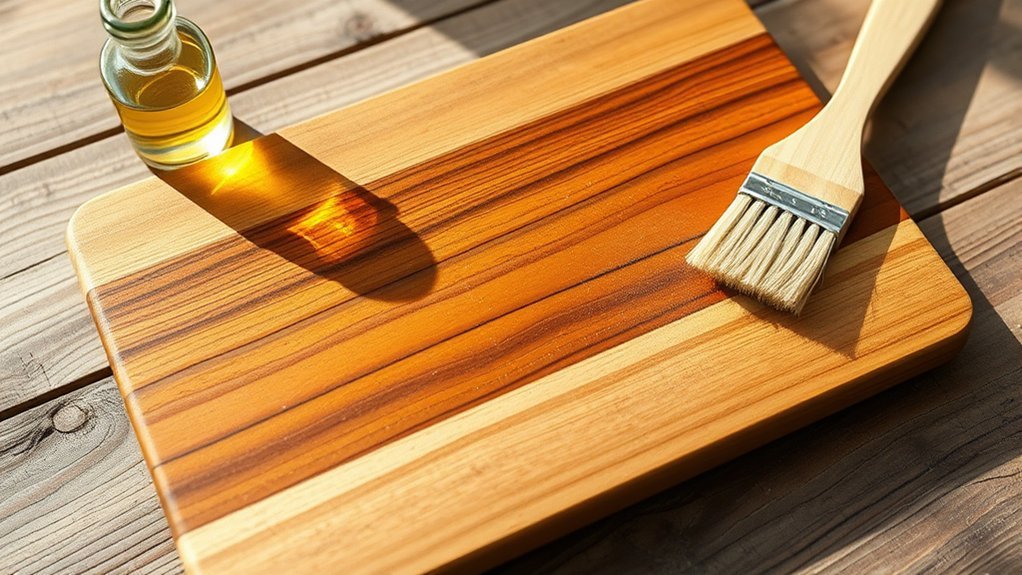
Tung oil is a natural drying oil extracted from the seeds of the tung tree, prized for its ability to penetrate wood fibers and create a durable, water-resistant finish. When you apply tung oil on a cutting board, you benefit from its rapid polymerization, which forms a tough, elastic film that enhances the wood’s resilience.
Among the key tung oil benefits is its non-toxic nature once cured, making it safe for food-contact surfaces. For cutting board care, tung oil effectively conditions the wood, preventing it from drying out and cracking. Unlike some finishes, it penetrates deeply rather than sitting on the surface, ensuring long-lasting protection without altering the board’s texture.
This makes tung oil an excellent choice for maintaining both the functionality and appearance of your cutting board.
How Tung Oil Protects Wood From Damage and Moisture
Although wood is naturally porous, applying tung oil greatly reduces its vulnerability to damage by creating a tightly bonded, water-resistant barrier within the fibers. This barrier acts as an effective moisture barrier, preventing water and other liquids from penetrating the wood surface.
As a result, the risk of swelling, warping, and microbial growth diminishes considerably. Tung oil polymerizes upon exposure to air, forming a durable film that enhances wood preservation without compromising breathability.
By penetrating deeply, it reinforces the wood’s structural integrity, minimizing surface cracks and wear. When you use tung oil on your cutting board, you fundamentally enhance its resistance to everyday moisture and physical stress, extending its lifespan while maintaining its natural appearance and tactile qualities.
This makes tung oil a practical choice for protecting wooden kitchen tools.
Benefits and Drawbacks of Using Tung Oil on Cutting Boards
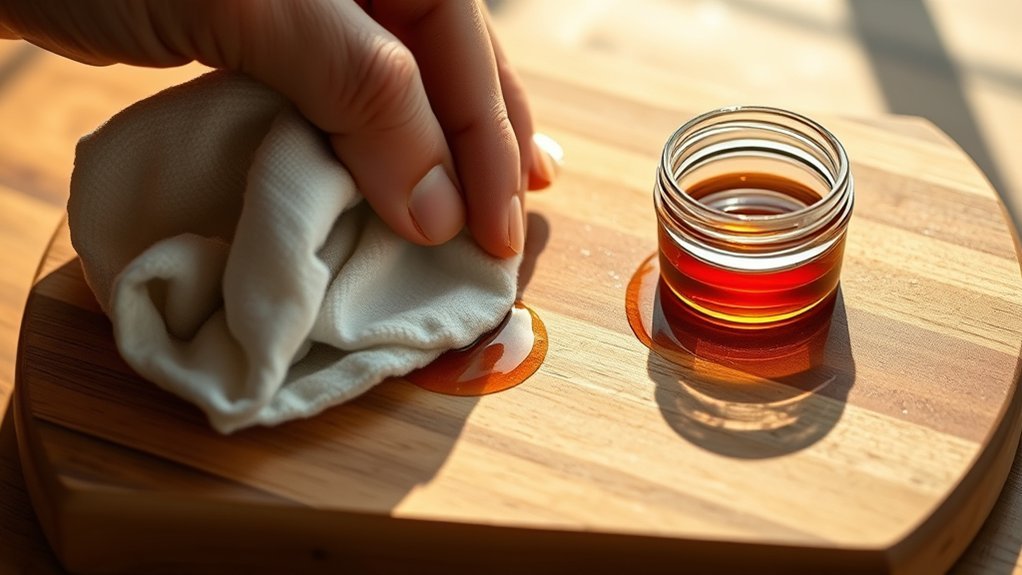
When you apply oil finishes to cutting boards, you’ll want to weigh both their protective qualities and potential limitations. Tung oil benefits include its excellent water resistance and ability to penetrate deeply, creating a durable, food-safe barrier that protects against moisture and bacterial infiltration.
It also imparts a natural, non-toxic finish that enhances wood grain without leaving a sticky residue. However, tung oil drawbacks involve its longer curing time compared to other oils and the need for multiple coats to achieve ideal protection.
Additionally, it may require periodic reapplication to maintain its effectiveness, especially with heavy use. Understanding these tung oil benefits and drawbacks helps you make an informed decision about whether tung oil suits your cutting board maintenance needs.
How to Properly Apply Tung Oil on Cutting Boards
Before applying tung oil, you’ll need to sand the cutting board thoroughly to create a smooth, clean surface free of dust and debris. Use a clean cloth to apply the oil evenly, working it into the wood with a brush or your fingers in thin, consistent layers.
Allow each coat to penetrate and dry fully before sanding lightly and applying additional coats for ideal protection.
Surface Preparation Steps
Three essential surface preparation steps will guarantee your cutting board properly absorbs tung oil for maximum protection and durability. First, start by thoroughly cleaning the board to remove any residue or dust.
Next, employ precise sanding techniques using progressively finer grits, beginning with 120-grit and finishing with 220-grit sandpaper. Always sand in the grain direction to avoid scratches that can trap moisture or bacteria. This also guarantees a smoother surface that facilitates even oil penetration.
Finally, wipe the board clean with a tack cloth to remove all sanding dust, which can interfere with oil absorption. By following these steps, you create an ideal surface texture and cleanliness level, essential for tung oil to bond effectively and enhance the cutting board’s longevity and food-safe qualities.
Application Techniques
With your cutting board properly prepared and free of dust, the next step is applying the tung oil to guarantee deep penetration and an even protective layer. Begin by selecting an appropriate application method, commonly a lint-free cloth or a natural bristle brush, to evenly distribute the oil.
Apply a thin, consistent coat, ensuring the oil saturates the wood fibers for ideal oil absorption. Allow the oil to penetrate for 15 to 30 minutes, then wipe off any excess to prevent sticky residue.
Repeat this process for 3 to 5 coats, letting the board dry completely between applications to enhance durability. Proper application methods promote thorough oil absorption, which is essential for developing a resilient, water-resistant surface on your cutting board.
How Long Does Tung Oil Take to Cure on Wood?
How long does tung oil take to fully cure on wood? Typically, the cure time depends on factors like temperature, humidity, and the number of oil layers applied. Each layer of tung oil requires about 24 hours to dry before applying the next.
However, full curing, the point at which the oil hardens and forms a durable film, can take up to 7 days or more. Applying multiple thin oil layers improves penetration and protection but extends the overall cure time.
You should allow the wood to sit undisturbed in a well-ventilated area during this period to guarantee ideal polymerization. Keep in mind that curing isn’t just drying; it involves a chemical reaction between tung oil and oxygen, so patience is critical for achieving a resilient, water-resistant finish on your cutting board.
Common Mistakes to Avoid When Applying Tung Oil on Cutting Boards
Although applying tung oil may seem straightforward, overlooking key steps can compromise your cutting board’s durability and safety. Common tung oil application mistakes include insufficient surface preparation, applying too thick a coat, and not allowing adequate drying time.
Avoid these to guarantee a lasting, food-safe finish.
| Mistake | Effect | Prevention |
|---|---|---|
| Inadequate sanding | Poor oil penetration | Sand thoroughly before applying |
| Thick oil layers | Sticky, uneven finish | Apply thin, even coats |
| Rushing drying time | Soft, uncured surface | Allow full curing between coats |
| Using impure tung oil | Potential contamination | Use 100% pure tung oil |
| Skipping clean-up | Dust and debris trapped in finish | Wipe surface before application |
Avoid these pitfalls for ideal tung oil application on your cutting board.
How Often Should You Reapply Tung Oil to Keep Your Board Protected?
Guaranteeing proper application techniques sets the foundation for your cutting board’s protection, but maintaining that protection requires regular upkeep. To maximize tung oil benefits and guarantee cutting board longevity, reapplication frequency depends on use and environmental factors. You should:
- Reapply every 4-6 weeks with moderate use to maintain a water-resistant barrier and prevent drying or cracking.
- Increase frequency to every 2-3 weeks if the board undergoes heavy daily use or frequent washing, as these accelerate oil degradation.
- Conduct an annual deep treatment by applying multiple coats and allowing thorough curing to restore full protective properties.
Comparing Tung Oil With Other Oils for Cutting Boards
When choosing an oil for your cutting board, you’ll want to take into account durability and water resistance to guarantee long-lasting protection. Tung oil typically offers superior water repellency compared to common oils like mineral or olive oil.
Additionally, assessing food safety and maintenance requirements will help you select the best finish for your kitchen needs.
Durability and Water Resistance
Durability and water resistance are critical factors to take into account when choosing an oil for your cutting board, as they directly impact its longevity and maintenance. Tung oil forms a robust moisture barrier, greatly enhancing cutting board longevity compared to other oils. Here’s how it stands out:
- Penetration & Polymerization: Tung oil penetrates wood fibers and polymerizes into a hard, water-resistant layer, unlike mineral oil, which remains liquid and less durable.
- Moisture Barrier Strength: Tung oil’s cured film resists water infiltration better than linseed or walnut oil, reducing swelling and cracking risks.
- Wear Resistance: Its tough surface endures cuts and abrasion, maintaining protection longer before reapplication is needed.
Choosing tung oil optimizes your cutting board’s durability and water resistance, ensuring extended use and fewer maintenance cycles.
Food Safety and Maintenance
Beyond durability and water resistance, you should also consider food safety and maintenance when selecting an oil for your cutting board. Tung oil is food-safe once fully cured and offers a hard, water-resistant finish that requires minimal upkeep.
Compared to mineral and linseed oils, tung oil’s polymerization reduces rancidity risk, enhancing food safety. For maintenance, regular reapplication keeps the surface sealed and hygienic.
| Oil Type | Food Safety | Maintenance Tips |
|---|---|---|
| Tung Oil | Non-toxic when cured | Reapply every 6-12 months |
| Mineral Oil | Food-grade, inert | Reapply monthly to prevent drying |
| Linseed Oil | Raw is toxic; use boiled | Reapply every 3-6 months; risk of rancidity |
Choose tung oil if you want durable protection with lower maintenance and strong food safety.
When to Choose Other Oils Instead of Tung Oil for Your Cutting Board
Why might you opt for oils other than tung oil for your cutting board? While tung oil offers excellent water resistance, there are scenarios where alternative oils might be more suitable due to differences in oil absorption and maintenance requirements. Consider these factors:
- Rapid Oil Absorption Needed: If your cutting board is highly porous, oils like mineral oil absorb faster, offering quicker initial protection.
- Food Safety Concerns: Some prefer food-grade mineral or walnut oil for guaranteed non-toxicity and hypoallergenic properties.
- Ease of Reapplication: Alternative oils often require less curing time, making periodic maintenance simpler.
Choosing the right oil depends on your board’s wood type, desired maintenance frequency, and safety preferences. Evaluating these criteria guarantees ideal protection without compromising usability.
Tips for Maintaining Your Tung Oil–Finished Cutting Board
To keep your tung oil finished cutting board in ideal condition, you’ll need to reapply oil regularly to maintain its protective layer. Clean the board with mild soap and warm water, avoiding soaking or abrasive scrubbing that can damage the finish.
Also, steer clear of harsh chemicals that can break down the oil’s polymerized surface and compromise the wood’s integrity.
Regular Oil Reapplication
Regularly reapplying tung oil is crucial to preserving the protective finish and durability of your cutting board. The reapplication frequency depends on use and exposure to moisture, but generally, every 4 to 6 weeks is ideal. Proper oil absorption guarantees the wood remains sealed and resistant to cracking or warping.
When maintaining your board, follow these steps:
- Inspect the surface for dryness or dullness, indicating oil depletion.
- Apply a thin, even layer of tung oil, allowing 24 hours for full absorption before wiping off excess.
- Repeat applications 2–3 times during the initial maintenance to reinforce the protective barrier.
Consistent reapplication maintains the board’s integrity, extends its lifespan, and guarantees ideal water resistance without compromising food safety.
Proper Cleaning Methods
Although tung oil provides a durable, water-resistant finish, proper cleaning is essential to maintain your cutting board’s protective layer and prevent damage. Use gentle cleaning techniques by washing the board with warm water and mild soap immediately after use. Avoid soaking it to prevent oil layer degradation.
After washing, dry the board thoroughly with a clean towel and stand it upright to air dry completely. For effective sanitizing methods, periodically wipe the surface with a solution of diluted white vinegar or a mild bleach solution (1 tablespoon bleach per gallon of water), then rinse thoroughly.
These approaches guarantee bacterial control without compromising the tung oil finish. By adhering to these cleaning techniques and sanitizing methods, you’ll preserve the board’s integrity and prolong its lifespan.
Avoiding Harsh Chemicals
Since tung oil creates a protective barrier on your cutting board, using harsh chemicals can degrade this finish and reduce its effectiveness. To maintain the integrity of the tung oil coating, minimize chemical exposure by following these tips:
- Use natural alternatives like mild dish soap or diluted vinegar for cleaning instead of bleach or ammonia-based products.
- Avoid soaking the board in water or chemical solutions, as prolonged exposure can weaken the tung oil seal.
- After cleaning, promptly dry the cutting board with a clean cloth to prevent moisture from penetrating the finish.
Frequently Asked Questions
Is Tung Oil Food-Safe Once Fully Cured on Cutting Boards?
Yes, once fully cured, tung oil application creates a non-toxic, food-safe finish. For cutting board maintenance, guarantee complete curing time to prevent any residue.
This provides durable protection without compromising food safety or board integrity.
Can Tung Oil Cause Allergic Reactions or Sensitivities?
Yes, tung oil can cause allergic reactions depending on individual sensitivity levels. You might experience skin irritation or respiratory issues, so it’s essential to test a small area and use proper ventilation when applying it.
Does Tung Oil Darken the Wood Color Permanently?
Yes, tung oil darkens the wood color permanently due to oil application penetrating fibers. This deepens and enriches the hue, creating a lasting finish, so you should expect a noticeable, enduring change after treatment.
Are There Environmental Concerns With Using Tung Oil?
You shouldn’t worry much about environmental concerns with tung oil, as it boasts sustainable sourcing and biodegradable properties. This makes it an eco-friendly choice compared to synthetic finishes that often contain harmful chemicals and pollutants.
Can Tung Oil Be Used on Plastic or Composite Cutting Boards?
You can’t effectively use tung oil on plastic or composite cutting boards since it doesn’t absorb well. For cutting board maintenance, consider tung oil alternatives like mineral oil or specialized plastic-safe conditioners instead.
Conclusion
Think of your cutting board as a shield, and tung oil as the armor that keeps it strong and moisture-resistant. Just like a knight wouldn’t charge into battle without well-forged armor, you shouldn’t expose your board to daily wear without proper protection.
While tung oil offers excellent durability and water resistance, regular maintenance is key to keeping that shield intact. Applying it right guarantees your board stays both beautiful and functional for years.
In conclusion, using tung oil on a cutting board is an effective way to protect and preserve your kitchen tool, ensuring it remains durable and moisture-resistant over time.