Imagine trying to fit a key into a lock that’s just slightly too small—it’s frustrating and ineffective.
When working with drill bits, size precision is just as critical. Is 5 16 bigger than 5 32 drill bit? You might wonder, and it’s an important question.
Understanding this difference isn’t just about numbers; it impacts the fit, strength, and finish of your project.
The size difference may seem minor, but it plays a significant role in how well your workpiece holds or aligns.
Let’s examine why that small fraction matters considerably and how knowing which drill bit is bigger can improve your project outcomes.
What Are 5/16 and 5/32 Drill Bits?
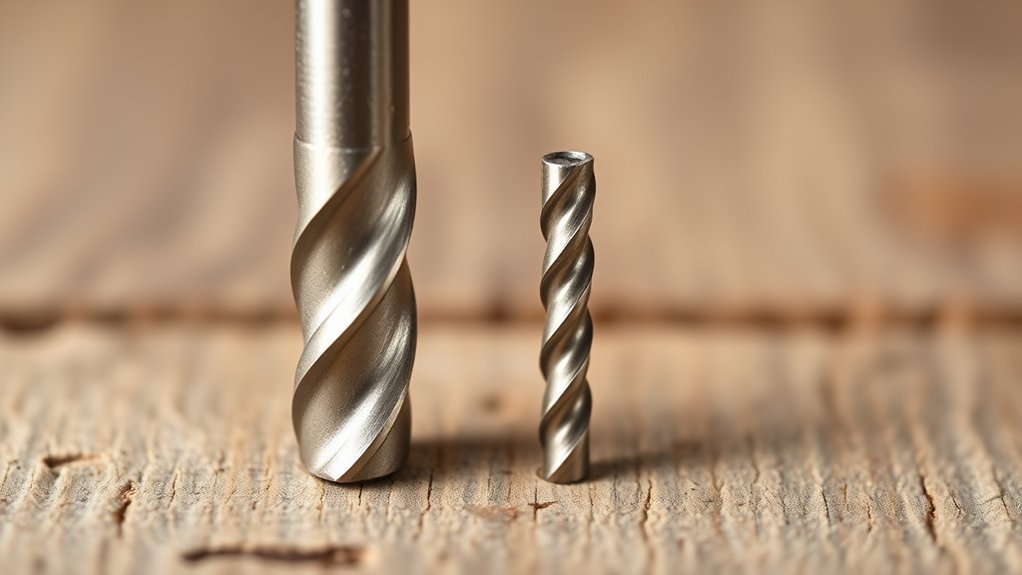
Although both 5/16 and 5/32 drill bits are commonly used sizes, they differ considerably in diameter and application. You’ll find these drill bit types designed for different material thicknesses and hole specifications.
The 5/16 bit has a larger diameter, making it suitable for drilling more substantial holes in wood, metal, or plastic. In contrast, the 5/32 bit is smaller and often used for precision tasks or thinner materials.
Understanding drill bit usage helps you select the right size for your project, ensuring clean, accurate holes without damaging the workpiece. Each drill bit type serves a distinct purpose, and choosing between 5/16 and 5/32 depends on the hole size you need and the material’s properties, optimizing efficiency and outcome.
Is a 5/16 Drill Bit Bigger Than a 5/32? How Much Bigger?
When comparing drill bit sizes, you’ll find that a 5/16 drill bit is notably larger than a 5/32. Specifically, a 5/16 drill bit measures 0.3125 inches in diameter, while a 5/32 drill bit measures 0.15625 inches.
This represents a sizing difference of exactly 0.15625 inches, meaning the 5/16 is twice the diameter of the 5/32. In drill bit comparison, understanding these sizing differences is essential because the diameter directly affects hole size and material removal.
The 5/16 bit’s larger diameter allows for considerably bigger holes, impacting factors like fastener fit and structural integrity. By quantifying these differences, you can select the appropriate drill bit size for precision and efficiency in your projects.
Why Does Drill Bit Size Matter for Your Project?
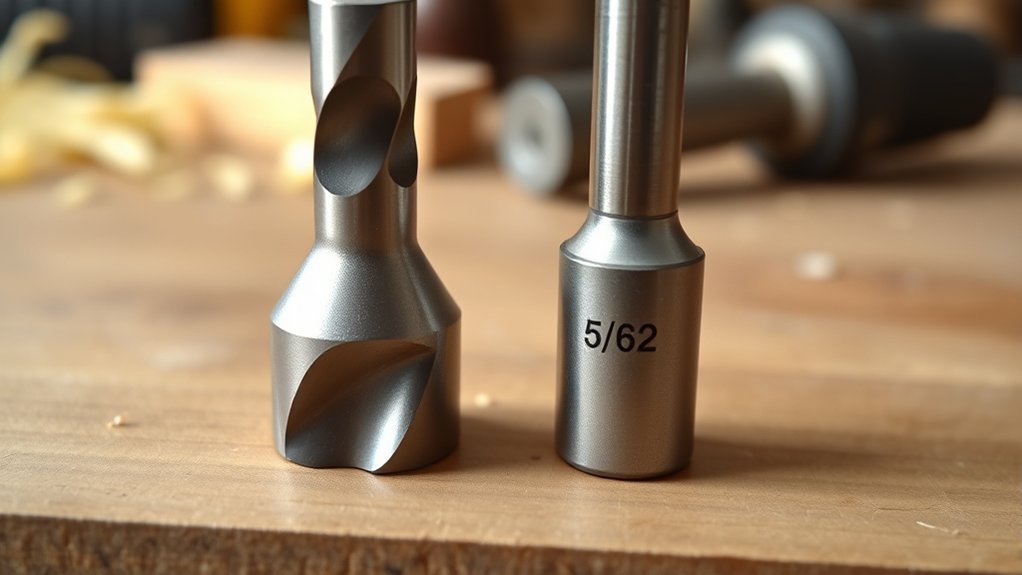
You need to select the correct drill bit size to guarantee precision in hole dimensions, which directly affects fit and function. Using a bit compatible with your material prevents damage and maintains structural integrity.
Choosing the right size ultimately influences the overall success and durability of your project.
Precision In Hole Making
Precision in hole making directly influences the fit, function, and structural integrity of your project. When you select the correct drill bit size, you guarantee components fit precisely without excessive play or forced assembly.
Using precision tools calibrated for exact measurements helps maintain dimensional accuracy, which is critical when drilling holes that must align with fasteners or mating parts. Employing advanced drilling techniques, such as controlled feed rates and consistent speed, minimizes deviations caused by bit wander or material deformation.
Even small variations in drill bit size, like the difference between 5/16 and 5/32 inches, can affect hole diameter enough to compromise assembly tolerances. By prioritizing precision in your hole-making process, you safeguard your project’s mechanical performance and longevity, avoiding costly rework or structural failures.
Material Compatibility Importance
Although drill bit size might seem like a straightforward choice, selecting the correct diameter directly impacts how well the material responds during drilling. Understanding material suitability is essential because different materials require specific drill bit sizes to prevent damage, guarantee clean cuts, and maintain structural integrity.
If you choose a bit too large or small, you risk compromising tool compatibility with the material’s density and hardness, leading to inefficient drilling or tool wear. For example, harder materials often need smaller, more precise bits to avoid cracking, while softer materials may allow slightly larger diameters without issue.
Impact On Project Outcome
Selecting the correct drill bit size doesn’t just affect tool compatibility with materials. It directly influences the accuracy, durability, and overall success of your project. Your tool selection impacts project efficiency by ensuring precise hole dimensions and minimizing material damage.
Using a drill bit that’s too large or too small can compromise structural integrity and lead to rework or failure. Consider these impacts:
- Achieves exact hole diameter critical for proper fastener fit
- Enhances material stability, reducing the risk of cracking or splitting
- Optimizes tool performance, preventing undue wear and overheating
- Improves workflow by reducing corrections and delays
When Should You Use a 5/16 Drill Bit Instead of a 5/32?
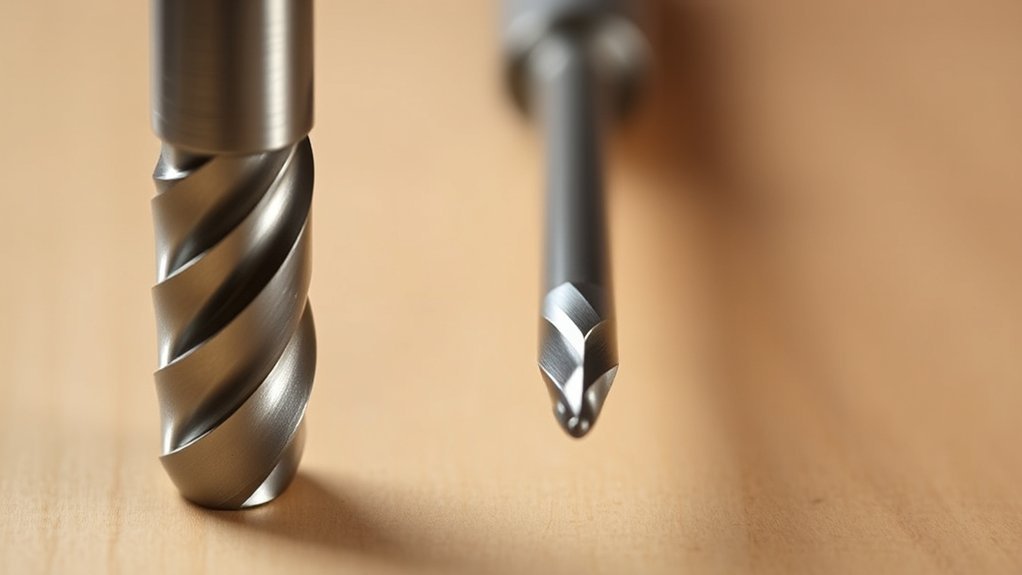
When do you choose a 5/16 drill bit over a 5/32? The key lies in drill bit selection based on required hole diameter and material tolerance.
Use a 5/16 bit when a larger hole diameter is necessary for fasteners, clearance, or fit. The 5/32 bit suits smaller, more precise holes to maintain structural integrity.
| Parameter | 5/32 Drill Bit | 5/16 Drill Bit |
|---|---|---|
| Diameter (inches) | 0.15625 | 0.3125 |
| Typical Use | Small pilot holes | Larger clearance holes |
| Material Tolerance | Tight | Moderate |
| Fastener Size | Small screws, pins | Bolts, larger screws |
| Application | Precision drilling | General purpose drilling |
Choose based on hole diameter requirements and guarantee ideal performance.
Which Materials Require 5/16 or 5/32 Drill Bits?
When selecting between 5/16 and 5/32 drill bits, you need to take into account the hardness of the material you’re working with. Harder materials often require smaller drill bits like 5/32 to prevent bit damage and guarantee precision.
Conversely, softer materials can accommodate larger bits such as 5/16, allowing for faster drilling and larger hole sizes.
Material Hardness Considerations
Drill bit size directly impacts your ability to penetrate materials of varying hardness effectively. When considering material hardness, you must evaluate the material composition and its position on the hardness scale to select between a 5/16 or 5/32 drill bit. Harder materials typically require smaller, more precise drill bits to reduce stress and prevent bit damage.
Consider these factors:
Metals with high tensile strength (e.g., stainless steel) often need a 5/32 bit for controlled penetration. Softer metals (e.g., aluminum) allow the use of a 5/16 bit for faster drilling. Hard plastics and composites benefit from smaller drill bits to avoid cracking. Wood hardness varies widely; harder hardwoods may require a 5/32 bit, while softer woods tolerate 5/16 bits.
Choosing based on material hardness optimizes efficiency and bit longevity.
Drill Bit Size Applications
Two common drill bit sizes, 5/16 and 5/32 inches, serve distinct roles depending on the material you’re working with. The 5/32 drill bit is ideal for softer materials like wood, plastic, and thin metals, where precision and minimal material removal are critical.
In contrast, the larger 5/16 bit suits harder materials such as thicker metals and masonry, requiring more aggressive drilling techniques to maintain efficiency and avoid bit wear. Selecting the appropriate drill bit type—twist, spade, or masonry—further optimizes performance based on material hardness and drilling technique.
Employing correct drilling speeds and feed rates for each size also prevents overheating and bit damage, ensuring clean holes and prolonging tool life. Understanding these applications helps you match drill bit sizes precisely to your project requirements.
How Drill Bit Size Affects Hole Fit and Precision
Although selecting the correct drill bit size may seem straightforward, it directly impacts hole fit and machining precision. When you choose a drill bit, you determine the hole diameter, which must align precisely with the fit tolerance specified for your project.
Choosing the right drill bit size is crucial for precise hole fit and machining accuracy.
A slight deviation can lead to assembly issues or compromised structural integrity. Keep these factors in mind:
- The hole diameter must accommodate the mating part without excessive clearance or interference.
- Fit tolerance dictates the allowable dimensional variations for ideal performance.
- Undersized holes can cause binding or stress concentrations; oversized holes result in looseness.
- Precision drilling reduces rework, improves repeatability, and guarantees component reliability.
Common Mistakes When Choosing Between 5/16 and 5/32 Drill Bits
Choosing between 5/16 and 5/32 drill bits often leads to errors that stem from misunderstanding their size differences and application contexts. Common misconceptions include assuming a larger bit always suits every task or neglecting material tolerance.
When choosing wisely, you must consider both the drill bit diameter and the hole’s intended purpose to avoid poor fit or structural issues.
| Common Mistake | Consequence |
|---|---|
| Confusing size scale | Incorrect hole diameter |
| Overlooking material type | Bit wear or damage |
| Ignoring tolerance needs | Loose or tight fittings |
| Assuming larger is better | Material damage or misfit |
| Neglecting drill speed | Reduced precision and finish quality |
Avoid these pitfalls by evaluating size and application carefully.
Tips for Picking the Right Drill Bit Size for Your Project
You need to understand drill bit measurements accurately to select the correct size for your project. Consider the material type since harder materials require specific bit designs and sizes.
Always match the bit size precisely to the task to guarantee efficiency and prevent damage.
Understanding Drill Bit Measurements
When selecting a drill bit size, understanding the measurement system is essential to guarantee accuracy and fit. Drill bits come in various types, each adhering to specific measurement standards: imperial (inches) and metric (millimeters). You need to know these systems to avoid mismatches.
Keep these points in mind:
- Imperial sizes use fractions or numbered drill bit types.
- Metric sizes are measured in millimeters, offering decimal precision.
- Some drill bit types, like letter or wire gauge, follow unique numbering systems.
- Conversion charts help translate between measurement standards to ensure compatibility.
Considering Material Type
Accurate drill bit measurement sets the foundation, but selecting the right size also depends heavily on the material you’ll work with. Different material types demand specific drill bit compatibility to guarantee peak performance and avoid damage. Harder materials like metal require smaller, precise bits, while softer materials like wood can tolerate larger sizes with less risk.
| Material Type | Drill Bit Compatibility |
|---|---|
| Wood | Standard twist bits, larger sizes |
| Metal | Smaller diameter, cobalt or carbide bits |
| Plastic | High-speed steel, moderate sizes |
| Masonry | Carbide-tipped, specialized sizes |
Matching Bit To Task
Selecting the correct drill bit size hinges on the specific requirements of your project, including hole diameter, depth, and the type of fastener or component involved. To optimize your bit selection strategies, you must analyze task specific requirements carefully. Consider these critical factors:
Match the bit diameter precisely to the fastener’s shank or pilot hole specifications to guarantee secure fitting. Evaluate material hardness to choose a bit with appropriate cutting geometry and coating.
Account for hole depth by selecting the correct bit length to avoid incomplete drilling or damage. Use specialized bits for unique tasks, such as countersinking or masonry drilling, to improve efficiency and accuracy.
How to Match Drill Bit Sizes to Screws and Bolts
Though matching drill bit sizes to screws and bolts requires attention to detail, you’ll guarantee secure and effective fastening by choosing the correct bit diameter. To ascertain drill bit compatibility, consider the screw sizes carefully: the pilot hole must be slightly smaller than the screw’s outer diameter for wood screws, allowing threads to grip firmly.
For machine screws and bolts, the bit should match the core diameter excluding threads to enable proper threading without material splitting or loosening. Avoid oversizing, as it weakens the hold, and undersizing, which risks material damage.
Refer to manufacturer charts or measure the screw’s shank and threads precisely to select the appropriate drill bit. This analytical approach streamlines your workflow and enhances joint integrity.
How to Measure Drill Bit Sizes Accurately
When you measure drill bit sizes, you need to use precise tools like calipers or micrometers to guarantee the diameter matches your requirements exactly. Accurate measurements are essential for effective drill bit comparisons, ensuring you select the right size for your task.
Follow these steps for precision:
Clean the drill bit to remove debris that can affect readings.
Use digital calipers for direct diameter measurement, aligning the jaws perpendicular to the bit’s shaft.
Take multiple measurements along the bit’s length to confirm uniformity.
Record measurements to the nearest thousandth of an inch for consistency.
Conclusion
You now know that a 5/16 drill bit, measuring 0.3125 inches, is exactly twice the diameter of a 5/32 bit at 0.15625 inches. This precise difference dramatically affects hole size and fit, so choosing correctly is critical.
Remember, even a fraction-of-an-inch variance can compromise your project’s integrity. Always measure carefully—accuracy in drill bit selection guarantees compatibility with materials and fasteners, preventing costly errors and ensuring professional results every time.
In conclusion, when deciding if 5 16 is bigger than 5 32 drill bit, understanding this size difference is essential for proper tool use and achieving the desired outcome.